Categories
Education

How to create a work team that achieves its objectives

The success or failure of a working group does not only depend on its members. Company culture, leadership style, and pay system also play a role in building the perfect team.

Nobody is perfect but a team can be. To successfully build workgroups, or optimize the performance of existing ones, certain factors must be considered that will determine whether or not employees can work together to achieve a goal.

CX Training is the main option when it comes to specialists offering tailored solutions that fulfil your customer’s requirements through customer training in Australia.

There are two types of factors, structural and dynamic, that determine whether employees can work as a team. First, a diagnosis should be made on the structural variables:

  • Company culture. It is useless to give training on how to work as a team if the company does not favor this methodology. Indeed, it is very difficult to try to create work teams when the company is very traditional. These organizations tend to have cultures in which command and control prevail, where the worker is not autonomous enough to contribute ideas, make decisions.
  • Internal organisation. The structure of certain companies makes teamwork difficult. They are organisations where the weight of the departments and the levels of the positions is very strong. Category differences, hierarchies, create insurmountable differences, including architectural barriers that hinder the relationship between employees.
  • Remuneration system. There are situations that play against teamwork and that favor competition among workers. They are work systems where individual reward is very important. For example, in a commercial team, where the worker who sells the most charges more.
  • Physical environment. The more physically separated people are – in offices, floors, buildings … – the more differences are created that do not favor teamwork. The problem: the lack of communication between them.
  • Especially when it comes to sharing information. If each unit has its information uploaded to a computer system and only it has access to retrieve it, it is evident that this does not encourage teamwork. On the contrary, each employee is empowered to keep the information and compete with her colleagues, making her own the maxim that information is power.

If when analysing the previous variables it is confirmed that the circumstances favor teamwork, it is possible to begin to address the dynamic factors, which have more to do with people.

Group dynamics

What should a team have to achieve adequate returns?

  • The team must have an objective, a perfectly defined goal that all team members know and share. This information is provided by the team coordinator, boss or director, or by the company itself.

Normally, everyone comes to share the same vision, but each member has their personal goals. Therefore, it is essential to discover what the hidden goals of each team member are. It’s like a football team: everyone has a goal – to win the League, the King’s Cup, the European Cup … – but there are players who have personal goals, such as not getting injured, renewing the contract, etc.


Thus, the personal objectives of each member of the group affect their degree of participation or their attitude and make it difficult for them to be as united as they should be. Therefore, these hidden interests must be discovered so that the whole team goes in the same direction.


  • Competences. In order for a team to meet its objectives, it would be necessary to analyse what knowledge and skills are required of its different members, because each one will interpret a functional role.


Once the team begins to function, do everything possible to make people aware of their level of competence, both professionally and personally. In this way, it is possible to know if workers need training or what aspects they must correct in their relationship with others.


  • Commitment. It is about seeing what interest each person has in meeting the team’s objectives. There are people who do their homework and when the working day is over they go home quietly. Others commit more, pull the car, get more involved, put in more hours – although this does not mean a greater commitment, etc.


The point is that if within a team the degree of commitment of its members varies, the final overall result will suffer. When there are more affluent people and those who dedicate more efforts perceive that others take advantage of it, they will stop doing so. This is detrimental to the dynamics of teamwork and leads to divisions among colleagues.


  • Cohesion. This factor has to do with communication. It is not about the group members being friends, but about the information being transparent and circulating freely among all of them. For example, if one person is unhappy with another or is suspicious of their work, it is best to treat them openly. If this is not done, the situation will negatively affect the objectives.

When selecting a person to be part of a working group, it is more important that he or she tunes in with the team’s objectives, because their degree of commitment will be greater than having all the knowledge, skills and experience, because this can be acquired.

Typically, team members are selected to represent their functional roles on the basis of their knowledge and experience, regardless of whether their personal traits help them work as a team. These characteristics have to do with the so-called emotional intelligence.

Emotional intelligence is based on:

  • Leadership. Above all, have initiative and also the ability to motivate other colleagues.
  • Self-knowledge. That is, perceive yourself in a balanced way: know your strengths and weaknesses.
  • Self-control. Dominate the ego, avoiding the desire for leadership.
  • Self-motivation. In this globalized and competitive system, don’t wait for a pat on the back. You have to motivate yourself.
  • Empathy. You have to understand and get to know others. Know what they think and feel, perceive their needs.
  • Cooperation. There are too many individualists, people who create conflicts and who do not know how to work in a team.

Dangers lurk

Building the ideal team is not easy and, sometimes, some circumstances can ruin the project:

  • Swimming against the current. When someone doesn’t share the team’s goals, don’t be overbearing. Give them opportunities to voice their objections and provide alternatives. If this does not work, it is necessary to give him a touch of attention, and in extreme cases, invite him to leave.
  • Select a friend. When there are no direct daily rewards, anything becomes a reward, for example, communication with the boss. If he has preferential treatment with one of the members, he is giving more authority to some than to others. In this case, you have to appeal to the mental maturity of the boss and his friend.

It seems clear that the success of a team is based, above all, on two pillars: having very clear objectives and making a good selection

With CX Training on your team, offering second to none conflict resolution training in Brisbane, we can help you achieve your goals and build a cohesive team to maximise your efficiency in the workplace.

 

Categories
Accounting Automotives Community Construction Culture Digital Marketing Education Entertainment Finance Health Technology

6 trends that will change business realities after the pandemic

Protocols and guidelines for physical distance, remote work, less mobility for travel, meetings and events, impact on reputation and employer brand, higher incidence of freelance work and work by objectives will be some of the main emerging that we will see in the world of work post Covid-19.

In a context where preventive and compulsory isolation is extended, where many companies are unable to operate or had to radically modify their operating guidelines, with many workers confined to their homes and having to reconcile their professional and work life in the same space , and many others over-demanded for providing services in activities considered essential, it is indisputable that the world of work will no longer be the same and everything indicates that some changes are here to stay.

In just a couple of days we changed our way of working, we left our offices and we had to adapt to new ways of carrying out our tasks. Overnight we put together the world’s largest home office experiment that not even the most visionary mind could never imagine, and that has no turning back, many things will not be as before in the world of work when the quarantine is over and we return to a certain, and new, normality.

Here at Applied Innovation you can count on our professionals’ expertise to adapt to these new trends and ensure your business will survive and keep thriving after the pandemic.

These are the main trends that, according to the experts, will lay the foundations for a new world labor scenario when the pandemic passes:

  1. Distance guidelines in offices, plants and work areas

Even when the quarantine is lifted and productive activity resumes, we will have to continue living with the physical distancing protocols that will substantially affect the way we link in the different work environments. Companies should strive to create safe work environments for workers, adapting their facilities, processes and work standards in line with the new distance parameters.

Thus, dividing screens, safety zones and monitored circulation, sanitation stations, kits for personal protection elements and strict occupation protocols in common spaces will be protagonists of the new normality at work.

  1. Home Office and remote work

The situation of preventive isolation forced many organizations to create the conditions for their collaborators to carry out home offices, even when the prevailing culture was oriented towards face-to-face work, control and compliance with schedules. The positive of this forced situation is that it collaborated to break down cultural barriers, prejudices and myths regarding remote work and productivity, self-management and the commitment of employees.

It is highly likely that after having gone through this experience, many companies do not want to have all their workers in their offices in front of the desk as before, and there will even be many workers who had a positive experience during the pandemic who do not want to either.

  1. Displacements, trips, events and meetings

The pandemic paralysed the world of travel and tourism and is expected to be one of the industries that takes the longest to recover. This situation, transferred to the world of work, will directly impact the organisation of conventions, conferences, trainings and other corporate events that will cease to be face-to-face and will go into virtual environments.

The same will happen with the typical formats of daily meetings in organisations, which will change to videoconferences to sustain the physical distance that will be the norm from now on.

On the other hand, companies must creatively and flexibly adapt working time schemes to avoid the transfer of workers in public transport during peak hours, as well as implement alternative days of attendance and other strategies that allow compliance with the safety gap between people in the different workspaces.

  1. Work by objectives is consolidated

As a secondary effect, teleworking, which was massively introduced by health circumstances, has made many companies realize that they do not need to rely on time control to ensure the productivity of their workforce, making work gain ground by objectives.

Many organisations with management cultures that distrusted flexible work formats, that prioritised “being” over “doing”, have been able to live the empirical experience and verify that presenteeism is not a guarantee of results. Confidence in remote performance and sustained productivity during isolation from the pandemic have shown that part-time work is becoming obsolete and goal-based work is gaining ground.

  1. Reputation and employer brand are put to the test

Although companies around the world face a context of high uncertainty and countless challenges at the same time, and talking about employer branding may sound superfluous or out of timing, just the opposite happens: this is exactly the time when Organizations must be careful to respect, protect, and even elevate their reputations, as their performance in these uncertain times will be judged not by their results, but by how they treated people.

Staying true to your identity and values ​​should be the guiding principle especially if the company is faced with the difficult task of making layoffs. Today is the time to put empathy, social conscience and values-based management in the foreground, so that they are the guide to navigate this crisis with transparency and sensitivity, based on open, sincere and humane communication with its collaborators.

  1. Freelance work and other flexible work format options grow

With less dependence on presentiality, greater possibilities for remote work and the consolidation of management by objectives, the post-Covid-19 world of work will offer greater possibilities for more flexible formats and work experiences and the inclusion of freelancers as part of the organisations talent pool.

With technology as a facilitator, we will see new growth in the “Gig Economy,” as the new mobile, remote, on-demand and independent work economy is called. In this sense, given that specialization and knowledge do not recognise hiring formats, the incorporation of talents in a freelance format, by project or part-time will grow hand in hand with a context in which organizations will need more than ever to be competitive in order to recover from the economic impact that the pandemic will leave.

The global pandemic unleashed by the coronavirus is driving new challenges, creating a scenario of greater uncertainty and unpredictability. All the paradigms with which we have been working, both companies and workers, have broken into a thousand pieces and we had to improvise and adapt on the fly to continue working despite of the virus that turned the world upside down.

Bear in mind that here at Applied Innovation we have a team of professionals with a unique combination of leadership and experience to prepare your people to adapt to change no matter how radical it is.


Categories
Education

​5 good reasons to start your relationship counselling sessions

Reasons why it would be a good idea to go to a therapist with your husband or wife. Couples therapy is one of the most useful offers of psychological intervention.

Contrary to what happens in other forms of psychotherapy, it is not necessary to have received a diagnosis of mental disorder to resort to it, because the nucleus in which couples therapy works is not the individual, but the relationship.

We are Relationship Counselling Australia, the place with highly qualified therapists that provide guidance with a personalised approach designed according to you and your partner’s specific needs.

Sometimes couples need to go to the psychologist

However, this advantage is, at the same time, a small drawback. The fact that relationships are so variable and that various points of view coexist in them makes the problems in it not be perceived in the same way.

Sometimes it seems that the relationship is going very badly, but soon afterwards very pleasant moments take place in it that make us rethink whether what we thought was a serious problem really was. Sometimes one of the members of the relationship thinks about the marital breakup, while the other does not even know that the other person is not satisfied. At other times, serious problems within the relationship are normalized and are interpreted as normal things, phases that any couple goes through.

Part of these inconsistencies are, why the following question is worth asking: How do you know when the time has come to attend couples therapy?

The moment when it is worth going to couples’ therapy

Here are some guidelines to know when to go to couples’ therapy.

  1. When the relationship is afflicted with communication failures

Many relationship problems are based on something as simple and as complicated at the same time as communication problems. Attending couples therapy sessions can serve to introduce new relationship dynamics into our lives in which the direct and honest expression of each other’s points of view has a reserved space.

In fact, during the same therapy sessions, the first important exchanges of impressions that were not taking place before will take place.

  1. When going through a specific crisis

If it is very clear that the problems experienced in the relationship are due to a more or less serious crisis that has to do with a specific event, such as a job dismissal or the death of a loved one, couples therapy can be of great help. usefulness to ensure that this painful experience does not also extend to the private sphere of the relationship.


  1. When there are problems in intimate relationships

The moment of attending couples therapy is also that in which there is little harmony in intimate relationships and in the expression of affectivity. This involves a wide variety of situations and goes beyond the realm of sexuality.

Simple things like caresses, moments of looking into each other’s eyes in silence or hugging can be a good that is scarce in some relationships, and it can be difficult to “break the ice” to start incorporating this type of behavior into the relationship.

  1. When there is indecision about future plans

Relationships as a couple are in part the way in which the present is experienced, and in part they are also the way in which the future is planned together.

If discrepancies and conflicts are perceived in this second aspect, couples therapy can offer a space in which each part of the relationship will find new tools to express expectations that they did not know how to express before, and will also have the appropriate context to establish a honest conversation about what everyone wants to find in the relationship.

  1. When children disturb the peace of the home too much

The appearance of sons and daughters is usually a very happy event, but sometimes it can also cause and not have the necessary space to make the relationship have its moments of intimacy. In couples therapy, effective strategies can be discussed so that the relationship is adapted to this situation.

When not to attend couples therapy

There are certain situations in which the problems in the relationship are so serious that it is not necessary to consider the possibility of going to therapy, and the clearest is that situation in which there is domestic violence and threats.

In situations like these it is very important that the abused party immediately break the relationship and take all necessary measures to be safe.

The cycle of violence and the process of victimization

In 1979 the renowned American psychologist Leonore Walker shed light on how victimization processes work from her research designed to try to understand and answer the questions previously asked.


From the testimonies of battered women, he realized that they are not attacked all the time or in the same way, but that there are phases for violence, which have varied duration and different manifestations. This is what has been called the cycle of violence, one of the most widespread theories on internal dynamics of violent relationships in the world.

This theory contemplates the existence of four phases in all dynamics of relational violence. The phases in which the cycle of violence is divided are succeeding each other, a fact that precisely makes it difficult for the cycle to be broken. In the same relationship, the cycle can be repeated infinitely many times and the duration of its phases can be variable.

  1. Calm phase

In a first phase, the situation is calm. No disagreements are detected and everything is lived in an idyllic way.

  1. Voltage Accumulation Phase

Small disagreements begin, as the aggressor feels increasingly questioned by his victim.

  1. Explosion Phase

The aggressor takes action. It is characterized by a strong discharge of the tensions caused in the previous phase by the aggressor. The most important physical, psychological and / or sexual assaults occur.

  1. Honeymoon Phase

At first, it is usually the phase responsible for keeping the victim in the cycle, since in it the aggressor initiates a series of compensatory behaviors to demonstrate to the victim that he is sorry and that it will not happen again.

Relationship Counselling Australia can completely change the way you look at your current relationship. Set goals, objectives and strategies to pursue what you both want effectively with our professional assistance. Contact us today for more information about our couples counselling in Australia, our experts will be ready to assist you.

Categories
Education

Anxiety is destroying your relationship and strategies to fight it

How does anxiety affect relationships? Today, many relationships are destroyed due to anxiety, insecurity and the desire to keep all situations under control.

All human beings are alert to alarming or threatening situations, to reduce the consequences of any adversity, in a way, it is a defense mechanism that occurs innately, this is known as anxiety.

However, many times this obsessive way of acting damages the mental and physical health of some people, since control of emotions such as: fears, anger, anguish, worry and phobia are lost, just for the fear of losing and being hurt.

In the physical area, anxiety plays an important role, since for the fear of losing or being attacked, the immune system is affected; the nerves, depression and tension of the body react in a harmful way, developing diseases such as tachycardia, dizziness, shortness of breath.

But how does anxiety affect relationships? Currently, many relationships are destroyed due to anxiety, insecurity, the desire to keep all situations under control, self-demanding, constant negative thoughts, can turn the relationship in a destructive state. However, you must be alert not to end love.

Remember that here at Relationship Counselling Australia you can fin experts in ready to assist you and help you solve these anxiety issues with the latest therapy methodologies.

  1. Fear

There are many types of fear that destroy a relationship such as: the fear of losing a partner (emotional attachment), socialising, facing problems, making decisions, taking risks, expressing feelings and emotions. When the couple suffers from anxiety, they will always have insecurity, triggered, obsessive jealousy, doubts, anguish, and can even act in a blackmailing way so that the couple does what she or he believes is the right thing to do.

How many times do people with anxiety invade their partner’s space? Remember that fears are only a product of your mind, caused by some past experience, of assumptions, in a low self-esteem phrase.

  1. Absolute control

No one has absolute control of life situations, however, you can reflect on the consequences of the acts that are committed. A person with anxiety develops in his mind the terror of not being able to control the future, lives in constant worry, stress and does not enjoy his present life.

In the long run, this destroys a loving relationship, since all people are independent and free. Remember that learning life is with the mistakes that are made, from taking risks to achieve the objectives and goals.

  1. Bad communication

Fear of expressing feelings is an obstacle in all relationships. Lack of setting limits causes many couples to fail. It is not always necessary to agree with the couple, since we all think differently, but the fear of not expressing ideas and opinions is a serious communication problem, even a person with anxiety will act submissively or defensively, without reach any kind of agreement.

  1. Low self-esteem

Insecurity and lack of self-love ruin relationships. The person with anxiety will always be self-criticising, they will never feel that their partner loves them as they are, with their strengths and weaknesses. He will always have negative thoughts about himself and even if he wants to achieve happiness, he will never get to know it.

Remember that before loving a person, it is essential to learn to love yourself. If there is something you don’t like about yourself, just set yourself and set goals to achieve it. Nothing is impossible!

  1. Health problems

People with anxiety usually trigger physical illness. Freezing, nerves, and stress are controllable problems. However, in love relationships, such behaviors ruin balance, coexistence and harmony.

If you live constantly stressed and worried, you can never see the positive side of situations, you can damage your health if you are close to vices. The couple will gradually move away if their illness is unknown. Crying and social isolation are common causes of anxiety, avoid them and communicate with your partner.

3 strategies that can help you overcome anxiety in a relationship

  1. Do not get ahead

If you had a bad experience in a previous relationship it is normal to carry fears that it will happen again with a new person, but drawing premature conclusions can lead you to feel more anxiety than normal. On the other hand, those nerves are not based on facts, but on emotions, so if you are anxious that your partner does not answer your messages immediately, take a deep breath and do not jump to conclusions, you may be very busy.

Experts recommend you to speak to yourself as you would to a friend who is going through the same thing as you. What would you say? Surely you would try to calm him down. We tend to be tougher on ourselves than others and it can be a very good idea to see each other from a distance and give us the advice that a good friend would give us.

  1. Your anxiety is not your partner’s problem

That you feel nervous because your partner does not pick up the cell phone when you call it is not his problem, so you better not blame him for your anxiety. “You are an adult and you need to manage your emotions and be happy,” explained the psychologist, “relieving your anxiety is not your partner’s job – it is yours.”

  1. You can’t control everything

You can control your thoughts and your body, but not that of others and that includes your partner. It may sound pessimistic, but bad things can happen and that’s beyond your control, so stressing isn’t worth it. Experts recommend that instead of feeling bad about something that is beyond your control, you better focus on what you can change: “do everything you can to make your relationship good, if they end up breaking up, at least you will know that you gave up. best of you ».

The term anxiety is very large, it covers many areas of the person. Fortunately, the help of a specialist can guide and support you so that your love relationship does not fail. Talk to your partner about it and if you think you have anxiety, together seek professional help at Relationship Counselling Australia.


Categories
Education

How do I write a proposal as an individual or for an independent project?

There are few resources for those seeking to apply for an independent project (that is, proposed by an individual not linked to an organisation) to philanthropic donors. Since foundations that have individual grant programs also have highly specific criteria, this makes it difficult to create a guide that covers these various requirements for all who seek funds as individuals.

In all this, remember a general rule: If you do not meet the requirements of the donor entity or contribution program, do not send an application, only search for foundations that have an express interest in your subject or topic and in your geographic region.

Here at Sydney Resumes we also offer you top assistance so you can go prepared to your first interview. But today we will focus on working on your cover letters.

Parts of a grant proposal

Ultimately, your proposal has to convince and has to make donors believe in your project and its ability to achieve the proposed objectives. In your application, try to make it clear that you consider yourself a partner in the foundation and that you can promote her philanthropic mission through your project.

In general, proposals submitted by individuals and for independent projects do not exceed five pages (one space), in addition to the cover letter and the budget. Here is a typical sketch of an independent project:

  • Cover Letter: A letter specifically addressed to the person in charge of receiving correspondence from each donor entity. Present the project and the applicant. 1 page.
  • Summary (also known as executive summary): Concise description of the entire project. 250 words or less.
  • Introduction: It serves as a presentation to the project and helps to establish the credibility of the applicant before the donor entity. 1 sentence up to 2 paragraphs.
  • Statement of the need to which the project responds: Present the problem that must be faced and answer the question – why do you need to invest funds in this project? 1 page.
  • Objectives: Presents the concrete achievements that you hope to achieve in response to the need. 1 page.
  • Methods: Describe what you will do specifically to achieve the objectives within a certain time. 1 page.
  • Evaluation: Explains how you will measure the results and effectiveness of your project, based on the measurement of each objective. 1 page.
  • Future financing: Describe viable plans in which your project could attract future sources of income. This step is primarily for renewable projects. 1 paragraph.
  • Budget: Presents a list of project income and expense calculations, showing precisely how much money you will need and how you will spend it to achieve your goals. 1 page.

Proposal models

It is quite difficult to get examples of proposals for independent projects, since most of the applicants do not usually share their ideas and documents. Furthermore, each proposal tends to follow the very specific guidelines of the donor foundations and of the project itself.

The proposals that come from non-profit organisations could help individuals to develop the different sections of their application, such as the approach to the need to which their project responds.

How To Make A Freelance Proposal: 4 Key Steps To Have Success

Writing proposals is quite a process. But if you want to be successful as a freelancer, you must do it day by day. Understand that it is a skill that is being forged. It is something that with patience you will improve with time and you will see results.

  1. Become a Detective: Do your best and collect as much information as you can about your potential customer. It may be enough to read the project description carefully, but generally a little — or much — more than that is necessary. Some projects are so vague in their description that you might be left speechless without knowing what they are specifically about.
  2. Don’t be surprised! Take that situation to do your best to identify the challenges your client is going through and demonstrate that you can proactively identify their problems and come up with a plan or solution. You can’t imagine it, but the power of empathy is SUPER important for anyone who offers services (or even products). Put yourself in the shoes of your clients and anticipate what they might need.
  3. Customise it your way. Well … each client is unique, each project is unique, therefore, each proposal must be unique. Read the details of the project over and over again and be sure to speak the same words as your client. If he or she says, “I need to develop a web page in HTML”, mention that you have worked with that language; But if you say, “I want a nice and functional web page,” you may have no idea what HTML or another language is. In particular if your profession has a very technical vocabulary, make sure you speak easily and that the client understands what you are talking about.


It is important that what you mention, be it your skills or competence, be based on what your client has already written in the project or what you have researched about it. One question to keep in mind while writing your proposal: why should you select me? Answer why you are the right person, speaking on your own terms.


  1. First Impressions Do Matter!

Again … the importance of the first sentences. If your first three lines didn’t catch the customer’s attention, you’ve already lost. Try to start by greeting him with his name or surname “Dear Mr./Mrs.”. Particularly if your name is not explicit in the project description and you got it by researching, you start earning a few points from the beginning. There are two things that will generally catch your attention immediately and we recommend being as far forward as possible in your proposal.

One is that you already have something prepared for them. Perhaps a sketch if you are a designer, a 1-2 paragraph draft if you are going to write or a small plan of the steps you would take when starting the project. You have to show that you are committed to that project. Well, it is a fact that if you do something in advance your chances of winning the project will increase substantially. Take a little time and effort, and you’ll make up for it later.

Here at Sydney Resumes we help you write and optimise your professional resume in order to make your way to the labour market easier.


Categories
Education

Tutorial:Innovation as a vital process for every organisation

There is no product and / or service without aprocess. In the same way, there is no process without a product or service. The immense technological, demographic, socio-environmental and economic changes that have been experienced in recent years have led many of the graphic products to face a process of substitution by other forms of communication used by companies and by people. These factors, added to the effects of the global financial-economic crisis,

Sometimes it is thought that innovation is triggered from a moment of inspiration, or that only a few lucky ones who have special abilities can do it. However, innovation is achieved in many ways, such as services that can be offered to the client, in the way in which a product is distributed, in the way it relates to other companies (for example, strategic alliances) or in the way of selling a product or service. On the other hand, innovation does not have to be based solely on novel ideas, but also, and more frequently, occurs through the implementation of small improvements in products or processes: continuous improvement.

Many times, the final results are set as an indicator of an innovative company, that is, new products, perhaps because it is what the consumer or customer of the organisation can visualise. However, the activities or processes that must be passed internally to obtain this result are not taken into account. Therefore, innovation must occur as a process because it covers all the company’s operations, that is, this process makes it possible to combine technical, financial, commercial and administrative capabilities and, in turn, allows new and improved market launch. products or processes that make firms more competitive.

The above is reaffirmed in the Oslo Manual, when it states that innovation activities include all scientific, technological, organisational, financial and commercial actions that lead to innovation. Both activities that have produced success are considered, as well as those that are ongoing or those carried out within projects cancelled due to lack of viability, since the latter favour the strengthening of capacities for innovation.

Bear in mind that here at Applied Innovation we have a team of professionals with a unique combination of leadership and experience to prepare your people to adapt to change.

Activities to obtain new knowledge

Therefore, identifying the innovation activities carried out by a sector or that have not yet been discovered takes great importance, since they are the ones that continuously modify the perspectives for the appearance of new industrial activities and the conditions of entry-exit of companies to an industry.

These transformations generate new competition mechanisms among companies that modify the structural conditions of the sector and define and reorient their technological trajectory, because there are different patterns in the propensity to innovate that determines the pace of evolution and economic growth of the sectors of the economy.

The management of innovation as a process

The innovative factor has become a strategic vector that allows the company to improve its competitive position, since its absence produces a serious insufficiency to generate new products and processes. In this sense, organisations must incorporate into their strategy actions aimed at managing the so-called innovation processes, so that they acquire greater capacity for adaptation and, above all, the possibility of anticipating and even causing ruptures that empower them to renew their competitive advantages in a timely manner.

The above is associated with the management that the organisation manages to develop in the face of change (both organisational, environmental, technical or technological), since this causes different effects on the sector and its way of incorporating these processes, and the results obtained will depend of its capacity for innovation, which in turn is due to “the most common sources of information used to innovate, the way in which innovative activities are organised and the way in which organisational, productive and technological skills have been incorporated in innovation processes.

In some firms, innovation is associated with the introduction of a single and single change, while in others, innovations are generated through progressive changes that are finally part of a significant change. But it’s not just about innovating successfully on rare occasions; innovation requires a constant awareness and willingness of the entire organisation, towards achieving greater efficiency that allows it to quickly transfer new ideas to products and services, and distribute them among new customers.

In some sectors and organisations, innovation processes are characterised by their informality, as described by professionals, because they generally do not enrol in planned processes or obey a strategic technology management and innovation, and because it originates in the solution of problems of adaptation of imported technologies, in the response to the needs of customers or in the use of market opportunities.

More specifically, at the organisational level

The organisations that will gain relevance in the future will be those that discover how to harness the enthusiasm and learning capacity of people at all levels of the organisation, and to this is important that the ability to innovate in organisations as part of the knowledge and learning processes is not considered as an individual skill, nor as the sum of a series of individual skills; it must be taken as a social competence shared by social actors who are part of a perhaps large amount of relevant practices.

This is also reaffirmed by West (2002) and Anderson, of Dreu and Nijstad (2004), indicating that the process of generating ideas (creativity) and its implementation (innovation), that is, the use of ideas and suggestions from Employees in the organization, has become a source of competitive advantage.

Nowadays, there is a fast pace for changing in the structure, relationships and processes in the work environments of every business. With our superior change management courses, Applied Innovation is ready to help your organisation adapt to the inevitable changes it’ll be changing. Contact us now for more information about our services and how we can help you achieve your goals adapting to change in your organisation.

Categories
Education

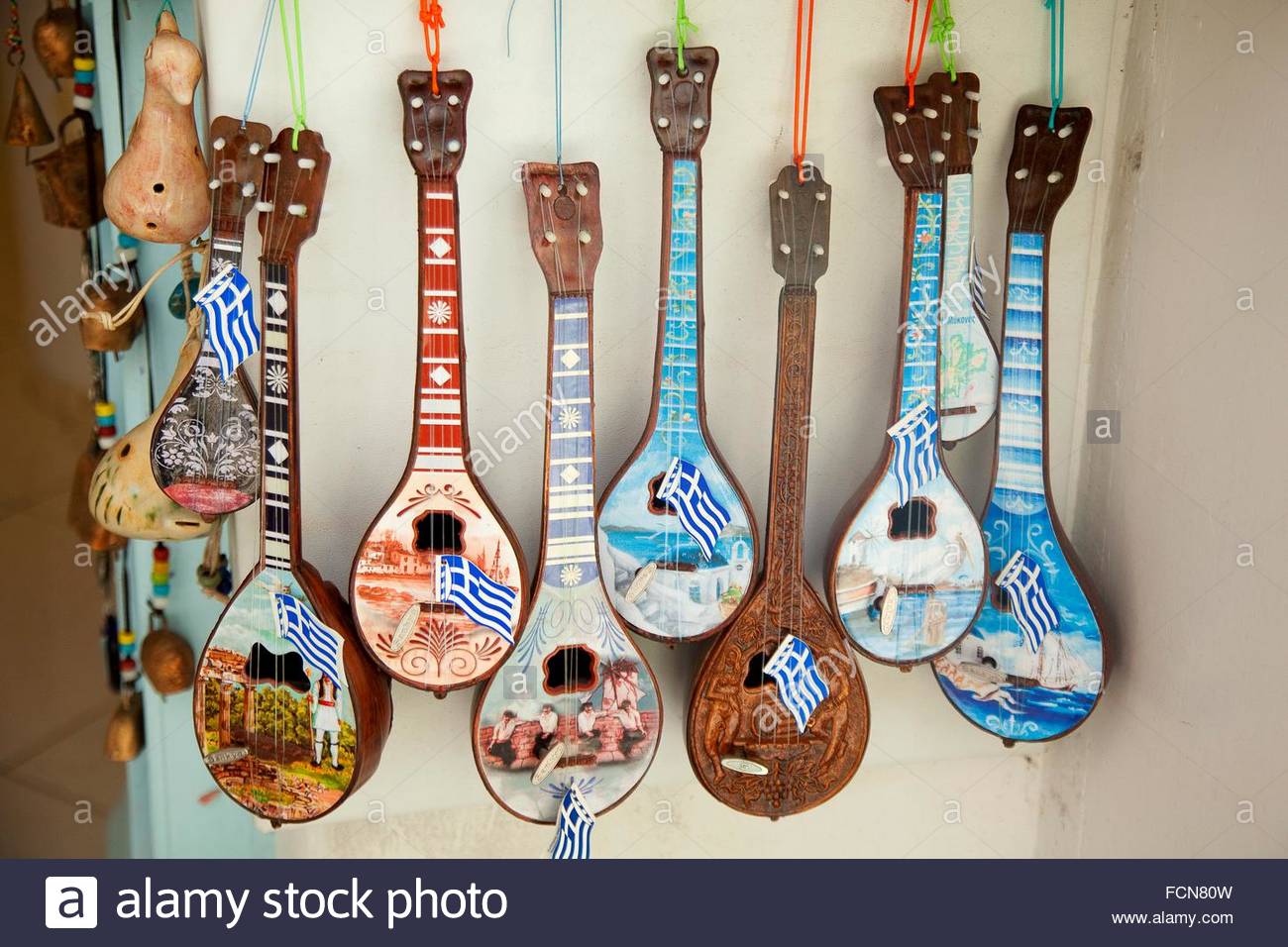
10 traditions of Greece that need to be preserved

Greek culture is one of the oldest, so its inhabitants have many quite interesting traditions. In this article, we talk about the customs of the Greeks today, both the most modern and those that come from the past.

Here at Nestoras College students learn about Greek traditions at no extra cost for their parents. Today we will learn more about Greek traditions and customs.

  1. Breaking the dishes

The Greek tradition of breaking dishes is one of the most striking. This is done in great celebrations such as weddings and birthdays, and is done to express joy. There are several theories of the origin of this custom. One of them is that formerly newlyweds broke dishes at the door of the house to scare away evil spirits. Another explains that breaking the plates made them believe that a violent scene was happening and therefore fled.

In addition to restaurants or the outdoors, sometimes the Greeks also break dishes in a house. To do this, the hosts acquire crockery dishes, a kind of clay. Also, a custom of the past was that when a marriage had to be separated for a time due to, for example, a trip, they broke a plate in half so that, in the reunion, they could recognize each other.

  1. Christmas and New Year

During the Christmas holidays, it is typical for children to go around the houses singing Christmas carols in exchange for some candy or money. They usually accompany their singing with small percussion instruments. Some beings that are said to arrive at Christmas are the Kalikántzaroi, some mischievous goblins who go down the chimneys of the houses and are scared of people until January 6, when they leave.

Although today many people choose to decorate the Christmas tree, the traditional thing in Greece is to decorate small ships in honor of St. Nicholas, who is the patron saint of sailors, since Greek culture is closely related to the sea.

  1. The decoration of boats in the Greek Christmas

On New Year’s Eve, people get used to playing cards. Also, in some areas of the country it is customary to break a grenade to attract good luck.

In the New Year the cake of San Basilio or vasilópita is consumed. Inside it a coin is hidden: whoever finds it will have good luck. It is San Basilio who, on this January 1, is responsible for bringing gifts to people.

  1. Wedding

Before the wedding, the groom waits for the bride at the church door. In this way, they enter together, holding hands and carrying white candles. At the ceremony, they are wearing crowns, because they are the kings of their family.

  1. Greek customs during a wedding celebration

When the rings are exchanged, the couple has to do it three times in honor of the Holy Trinity. Likewise, the priest and the bride and groom take three turns around the table.

Once married, during the treat, family members and friends of the newlyweds eat together. A typical dance of this celebration is the hasapiko, in which the dancers are caught by the shoulders.

The bride usually keeps a little sugar from the one taken during the banquet, since this way she makes sure that her new life as a couple will be sweet.

  1. Funeral traditions

A funeral tradition that catches the attention of this era is to put coins in the eyes of the deceased. This was done because it was thought that when you died you had to cross a river and the only way was that Charon passed you with his boat. With the coins, the dead person could pay him to take him.

If you are interested in the history of ancient civilizations, you will surely like this article: Ancient civilizations of the world.

  1. Religion and beliefs

The vast majority of Greeks are Orthodox Christians. For them, an outstanding date is January 6, Epiphany Day, when they celebrate the baptism of Jesus. Likewise, for the Greeks the celebration of the saint is more important than the birthday.

As for superstitions, in rural areas they believe in curses. This is created by the envy of a person and produces discomfort. To prevent it, they wear an amulet: a blue eye. Likewise, when the Greeks hear bad news, they spit, because in this way they turn away the evil. This act is also usually done at weddings and baptisms to bless people.

  1. Culinary traditions

For the Greeks it is important to share meals with family and friends, it is a social act that is carried out regularly. It is not common to leave food on the plate, as it is considered rude.

The diet of the Greeks is Mediterranean, so there are plenty of vegetables and vegetables, in addition to olive oil. The meat they consume the most is lamb. In addition, they also produce cheese.

Also, a part of its cuisine is also influenced by typical Turkish food, as they consume products such as dolmades.

  1. Social traditions

The Greeks do not greet with the open palm, they consider it rude. To greet each other, they shake hands, except for friends and family, who give each other kisses or a hug. This society is quite hospitable. It is thought that this fact is due to the fact that in the past they thought that a stranger could be God, so they always treated him well.

  1. Carnival

The Carnival, known as Apocry, is an important celebration for the Greeks. It begins ten weeks before Orthodox Easter and lasts several days. The city with the biggest Carnival is Patras, where a big parade is held.

Also, in some populations they organise events that may seem strange. For example, in Galaxidi, the Alexropolemos or War of flour takes place, in which all the inhabitants throw flour in the street.

Here at Nestoras College students learn about Greek traditions and Greek mythology at no extra cost for their parents. Today we will learn more about Greek traditions and customs. Contact us today for more information.

Categories
Education

7 psychological skills a good salesman knows

Selling is a complicated mission that requires patience, dynamism and a number of other important skills. But does that mean that some kind of gift is necessary to be a successful seller?

On the contrary! The characteristics of which we speak can (and should) be developed over time, and even those who do not naturally possess some of these qualities can acquire them.

The most demanded job position is clearly the commercial one. Too many companies and workers think that selling is something that anyone can do and that there is no need to have specific training. But they are wrong. Therefore, some sellers get good results and others do not. Some enjoy their work and others do not.

All businesses must have an important commercial force that is the key to success for the growth of a company. What skills should, then, develop a person who really knows how to sell?

Sales are the business engine of 100% of the economy: if a company does not sell, there is no way to sustain it, which means that it has to lay off employees without skills and that those people cannot buy either, turning everything into a cycle.

And, even if you are not part of the commercial area, it is important to develop qualities that allow you to “sell” as a personal brand, show yourself as one of the right candidates and know that you can respond to the needs of a company.

In itself, in any environment, when you have a business or venture, having those commercial skills or the right personnel is something that must be analyzed and decided very carefully, because it will not only be about the image of the company, but also about how to build customer loyalty and achieve that “voice to voice” that can reach more people.

CX Training is the main option when it comes to specialists offering tailored solutions that fulfil your customer’s requirements through customer training in Australia.

Beyond a good personal presentation and being charismatic, a good seller is also characterised by communication, empathy and trying to recognise what a customer really wants.

  1. Interest: This goes hand in hand with good customer service and if you really do not appear but really show interest in the needs of your client, you will have a first step won.

This also relates to the ability to be “inquisitive” and reach depth (even emotional issues that may or may not encourage a purchase) of why a specific product or service is required. Of course, this does not mean “stalking” the person but it does have the tact to get more information about those needs.

  1. “Be a bee”: as it is said in Colombian colloquial terms or, the simple fact, of trying to be more intelligent and identify where it is that the client wants to go with what he is saying or proposing.

According to the experts “good salesmen can make inferences and logical deductions, reading between the lines to understand the true meanings and desires of their potential customers and be able to obtain important points strategically.” This involves a lot the ability to understand the type of adjectives that clients use as well as their body language.

  1. Talk about losses: in this regard, experts explain that, psychologically, it is more difficult for the person to cope with the feeling of loss than to consider one of profit, because it is a more emotional than rational issue when it comes to take decisions.

Then, when you can talk and quantify those kinds of losses compared to the profits, you will have more points in your favor. Of course, this does not mean just talking about a negative outlook, but insisting once in a while on it.

  1. Emotional intelligence: identifying emotions of frustration, anxiety or fear is essential to be able to engage in an appropriate dialogue. This implies having to find a way to calm those tempers and direct them towards an adequate solution.

But this also follows the fact of controlling their own emotions and that, before a person who feels angry, respond appropriately.

  1. Smart interaction: Just as a person who has good business skills must read everything to his client, you also have to be aware of how they are reading it: this involves putting yourself in the shoes of the person with whom you are talking and considering, Depending on your company, lifestyle or the little you can know, what can you expect from that business person.

Remember that personal presentation and first greeting is what causes a first impact that may or may not be the gateway to a long business relationship.

  1. Offer less: the most used strategy will always be to offer or give different alternatives, but sales are not based on giving more in exchange for less. According to the American Express Open Forum, when you decrease the options that a person can choose from, it will increase the level of indecision.
  2. Disqualify: well, be careful. Neither misunderstand it and it does not mean that you will treat your client badly. In fact, it only applies when you want to have a totally sincere relationship, once you know your needs and ability to pay. Present affordable options, because many times by saying “I don’t show you this because your money is not enough”, it can trigger the person to really want to take his place and prove that he can.

It is not about manipulating or persuading, since sometimes an economic effort can be much more profitable over time.

The sale is one of the most controversial activities in the business world. It is necessary and at the same time hated. In fact, many people hate selling and see all sellers as scammers.

With CX Training on your team, offering second to none conflict resolution training in Brisbane, we can help you achieve your goals and build a cohesive team to maximise your efficiency in the workplace and boost your salesmen’s potential.


Categories
Education

The most demanded jobs in Australia

If you are planning to travel to Australia or if you are already living in the country, this article is an excellent tool to know the most demanded jobs at the moment and elaborate your professional plans more effectively.

According to the Australian Department of Employment and Small Business, labour market conditions are strong and strong, especially for young people working in the Commerce and Retail, Accommodation, Business with Gastronomy, Hospitality and Construction industries. However, the health care and social assistance sector are the main drivers driving their growth.

While the labour market in Australia is strong and the outlook for the future is positive, we must be realistic with students and international workers looking for good opportunities.

The true richness in the Australian experience should not only be considered in terms of work, but there are many other important factors to consider, such as abandoning your comfort zone and reinventing yourself, meeting new cultures and people, maturing and growing, the list goes on…

Getting a qualified jobs can be difficult, but it is not impossible.

Every year, the Australian government publishes lists of professions in great demand in Australia, a useful source to verify if your profession is in demand or to establish new paths for your career if you wish to stay in the country any longer.

You can consult the full list of strategic skills in the medium and long term or the list of short-term qualified occupations online. Remember that at Sydney Resumes we will help you achieve your professionals goals starting with how you introduce your competencies to companies and businesses.

Top 5 most demanded jobs in Australia

  1. Health industry

This is the largest and fastest growing industry in Australia, which employed more than 1.6 million people in 2017 for jobs.

Due to the aging of the Australian population, there was an increase in health awareness and the National Disability Insurance Plan was implemented. It is expected that this area will be the strongest in the country until 2022.

There is a great demand for health professionals, especially in regional areas. The most demanded are:

  • General practitioner or general practitioner (doctor)
  • Nurses
  • Caregiver of the elderly and disabled
  • Caregiver of qualified children

For these kinds of professions, many previous steps are required to start working. You will need a validated university degree or a recognised qualification, a high level of English, good interpersonal skills and be flexible in terms of working hours. Doctors in Australia are very well paid and almost all specialties are on the demand lists of experts. If you want to validate your profession, keep in mind that it is a detailed and demanding process, and that it could take a while.

  1. Construction

This sector has employed more than 1.1 million people in 2017 and continues to grow. The professions related to the field are:

  • Engineers
  • Architects
  • Project Manager

Australia currently demands a variety of types of engineers, including aeronautical, agricultural, aircraft maintenance, biomedical, construction and civil, chemical, computer, electrical, electronic, environmental, mechanical, mining and more.

This country also needs architects, a good opportunity for students with degrees and complementary courses required by the sector.

Also, Australia has a high demand for qualified engineers. The new employment figures obtained show the growth of the market in engineering jobs in all the states and territories of the country. Civil engineering is the occupation that occupies most of the vacancies, followed by mining engineering, industrial engineering and mechanical engineering.

  1. Education

This is another sector that employs more than 1 million people (2017) in Australia. Professionals in this sector are highly demanded both nationally and regionally, with job opportunities throughout the country. The most requested professions at the moment are:

  • Primary level teachers
  • Secondary school teachers
  • Early childhood teachers
  • Childcare worker and manager

In this area, the workforce requires high levels of education, especially at the university level. Leadership skills and previous experience are very valuable and can be a great differentiation among other candidates.

Being an English teacher for speakers of other languages ​​is also on the list of experts on demand, a good opportunity for international students interested in training courses for teachers.

  1. Technology

Global technological development is increasingly affecting the market, which means that more and more technology-based professionals are needed to continue growing. The main professions are:

  • Application and software programmer
  • Web designer
  • Web developer
  • Director of information
  • Analyst programmer
  • Professionals in Information and Technology Communication

This is a wide area with many different types of specialists. In general, most of them have very good average base salaries.

  1. Social workers

Social work is one of the fastest growing professions and is in great demand both in Australia and globally. If you are a professional with experience and passion to help people and communities, who can provide advice, information and emotional support, then the migration to Australia could be a good option for your career growth. The list of clients for workers in this occupation can include people with addictions, refugees, people with mental problems, children who are victims of abuse, people with disabilities, among others.

In addition to the mentioned areas, there are other professions with great demand that are also present in the list of qualified visas:

  • Chef / Chef
  • Cook and confectioner
  • Cafeteria or restaurant manager
  • Dentist
  • Psychologist

The Industry in Services / Hospitality and Gastronomy is very strong in Australia, due to the large number of restaurants and cafés of quality and renown, which means that there are many job opportunities in this sector. This is a country with great opportunities for work and growth.

Bear in mind that although past work experience is very important you also need to hand a well-written and complete resume that can help your employer know your capabilities and strengths. Here at Sydney Resumes we can help you achieve all professional goals and also assist you with tips that can help you complete any job interview successfully and make sure you can have that job you want so much.

Categories
Education

Brainstorming: The Art of Taking Advantage of Craziest Ideas

Great, mediocre, meaningless, seemingly useless … These are the ideas that arise from a ‘brainstorming’ session. This technique, in practice for sixty years, has its rules and seeks to stimulate the creativity among groups.

Brainstorming is based on the theory that many meetings fail because, since they arise, ideas are subjected to destructive criticism by attendees, so that they do not have time to mature and perfect themselves. To prevent it, experts devised a really effective method, which he called deferred judgment. It consisted of radically separating the process into two phases. In the first, the group did not issue any judgment on the ideas that were generated. In the second phase, when the sufficient number of ideas had already been generated, a critical and selective examination was carried out.

Bear in mind that here at Applied Innovation we have a team of professionals with a unique combination of leadership and experience to prepare your people to adapt to change.

The most orthodox brainstormers demand that it be another different group that makes the selection of ideas. In addition, they usually emphasize two factors that determine the quality of a ‘brainstorm’:

  • A good address. It is essential that a veteran prepare, order, moderate, control and direct the session. Without a moderator who motivates and controls the attendees, the brainstorm is a waste of time, as situations such as booing can be given to one of the participants.
  • The composition of the group. It is better to incorporate people from other departments or areas of the company. You can see the problems from a different perspective than the usual members. It is not convenient for those who understand a lot about a topic or are too involved to participate. It can be counterproductive, as they could create excess ideas similar to the original patterns.

The storm is coming

To carry out a good ‘brainstorm’, it is necessary to follow these steps:

  1. Individualisation. The moderator will ensure that all attendees know the problem, the procedure and the rules of brainstorming. Each attendee must have a blank sheet of paper and a pen, to write as many solutions as possible.
  2. Exhibition. A few minutes later, each member of the group exposes the ideas generated, without discussing them.
  3. Group. Next, the group is armed with post-it, underlines and folios, and dedicates five minutes to do another brainstorming, this time collective, to add more solutions to the same problem. They are written in turns on a blackboard so that they can be seen by all members of the group.
  4. Comparison. The next step is to combine all the solutions, so that new ideas can be generated.

The 4 P’s

These are the four ‘P’s’ of the ideal brainstorming session:

  • ‘People’. All things being equal, a group of creative people by nature will outperform another group of people who are less so. They can see problems from different perspectives and have the ability to quickly produce many different types of new ideas.

The most effective groups consist of four, five or six people, although five is the ideal number. If possible, multiple groups of five people should produce their ideas in the same room. This situation can facilitate spontaneity.

  • ‘Process’. To create as many ideas as possible, it is necessary to separate the generation of ideas from the evaluation. Therefore, a good moderator will establish certain minimum rules before starting the session.

The techniques are also fundamental. Groups can start with brain cleaning: participants share their ideas and, from there, new ones are produced.

  • ‘Pressure’. It is about the positive and negative influences around the group. External pressures, especially the limitation of time to get ingenious ideas, are often counterproductive.

According to experts, the group must have a fun spirit, with humour and spontaneity. Creating the right environment is not easy. The best way to achieve this is to bring together the most uninhibited group members.

  • ‘Product’. The last ingredient to create a session in which effective ideas are generated is to be very clear about how they are produced. Ideally, place all ideas on the same level: those that arise at the beginning and during the meeting, the best and the worst. Any of them can be used to solve other problems at an upcoming meeting.

Preparation

Orthodox brainstormers ensure that the ideal session should be developed:

– In a room that is not too small, with the chairs arranged in such a way that all attendees can see the board at all times.

– Without telephone that disrupts the session and avoiding trivial interruptions.

– Calculating beforehand how long the meeting can last.

– With a previous list with the problems to be solved and the time dedicated to each one.

– Summoning the right people, depending on the topic.

– Not forgetting a good battery of pens, abundant ‘post-it’, colour highlighters.

– Finally, in the event that the meeting is held regularly, it would be convenient to check from time to time that it is still useful and, therefore, does not mean a waste of time.


Brainstorming sequence

Brainstorming is essentially used in three specific phases: problem identification, analysis of its causes and search for concrete solutions.

In all these stages, this technique constitutes a very effective instrument. The group moderator should review the topic of the session using questions such as: why?, how? than? when?

– The problem raised in the session is the development of a course on automobiles. The objective is clearly set: “What topics should be addressed during the course?” Then, each member of the group thinks silently and writes what they have devised on paper. The group moderator must ensure that the standards of ‘brainstorming’ are met: shifts, goals, etc.

– Next, each participant suggests their ideas by saying them aloud, until all the ideas are written on the board. Among all the answers, for example, the following are selected:

  1. Types of cars.
  2. Parts of cars.
  3. Car manufacturers.
  4. Categories of cars.
  5. How they work.

– Final selection. When all ideas have been registered, they should be combined with each other with some logic. 1. Car types and 4. Car categories are practically identical concepts, so point 4 is eliminated.

– Subsequently, all chosen ideas are listed.

– Each member of the group votes what they consider best, preparing a list that should not contain more than one third of the total ideas presented by the whole group.

– After the count, ideas are separated with only one or two votes. Then we proceed to vote again among the ideas that have won three or four votes. If there is no clear winner, it is time to vote again or hold a debate on the remaining ideas, and clarify which one gives the best answers to the initial question.

Contact us today to know how we can help you achieve your goals and make sure change has a positive impact in your business.

Categories
Education

How to know if a document is confidential


A good security in the information, includes from the personal, confidential or commercial information, susceptible of being misused by unauthorised users. According to the LOPD, it also includes employees who handle this type of documentation in order to comply with this security in the information and not incur in the legality.

We infer therefore that any information contained within a company is a confidential document that must be duly guarded according to the Law. If you work for a company that handles personal data of clients, employees and suppliers, all this information is confidential, exclusive use of the company and therefore should be treated as such.

Here at Secura Bags we put at your service our destruction service in any format and with the guarantee that gives you the certificate of destruction valid before any agency.

What information should be protected in confidential documents?

We must take into account what means the company in question has to collect this data, online it will be one way and offline format of another. But in any case they must be protected by the integrity of the business that will train employees to take charge of compromising situations.

Involve employees by including them in a first-hand information of the corporate user manuals of how the company complies with the law and more specifically in the protection of personal data that it handles.

Any information produced by a company must be protected, patents, registered trademarks, copyright information, etc. Confidential information that can cover any type of documents, trade secrets, business plans, marketing strategies, tax or financial information, etc.

What happens if confidentiality is failed?

The incorrect treatment of any confidential document by a company or an employee culminates with the imposition of a serious infringement according to the Spanish Agency for Data Protection (AEPD). A monetary penalty that can vary in severity and amounts from 60,000 to 300,000 dollars, depending of the country.

In the world in which we live, we are all aware that information is power, so that this information falls into the wrong hands can be used against us both personally and in our professional career. If it is at a professional level, the free use of confidential data can cause serious damage to the company in which we work, such as the loss of privacy of employees and customers, leading to financial losses, brand reputation, etc.

How to guarantee the compliance of the LOPD?

In order for the documents to remain confidential we must ensure that the LOPD is properly complied with in several aspects: employees, storage and destruction of confidential documents. Limit the number of people authorised to access this type of documentation and allow those who are required to see it. It is one of the ways in which the company guarantees the correct use.

Use of the services of a Document Destruction Company to regulate business documentation with data contained in digital media and on paper. By destroying this type of confidential documents, we have the guarantee and security of eliminating a possible breach of confidentiality, preventing it from falling into the wrong hands and respecting the law.

Confidential destruction is not an issue that large or small companies can do on their own without breaking the LOPD. In order to obtain a certificate that certifies this type of confidential destruction, they must place their sensitive documentation in the hands of qualified companies and in this way be completely sure of the correct destruction, whether in paper format or computer equipment.

Difficulties of confidentiality

The protection of confidentiality, so important for the moral integrity of people, requires constant effort and various specialised strategies to be carried out. Today more than ever, the defence of the secrecy of personal data becomes necessary.

Difficulties of confidentiality Societies, eroded in their axiological texture, tend to act without consideration, without the least respect for the privacy to which every citizen is entitled. The following case will give us a guideline to understand to what extent services such as All-Safe are needed, to promote a healthy social dynamism in contemporary cities.

Serious lack

A recognised medical institution, the Hospital Clinic, recently opened a disciplinary file to a former resident. The aforementioned inmate acknowledged that he had left in the public thoroughfare, near a dumpster, confidential files of people who had received heart transplants. The discovery of the culprit took place just a week after the newspaper El País, denounced the discovery of the documents. The research developed at the request of the Hospital Clinic, at the end indicated as direct responsible for the lack of a former resident who left the institution in June 2008. Therefore, that person is not currently part of the staff of the Clinic.

Privacy in danger

The files left in the trash, in full view of everyone, very close to the location of the Clinic, included about 40 pages in which there was a record of the follow-up performed on patients who had undergone heart transplants. The documentation was dated March 2007. It seems that the resident kept all this information at home during the time he worked at the Hospital Clinic. When this person decided to change his address, it was easy for him to leave all those files in a container for recycling paper and cardboard.

However, part of these documents, due to the patent negligence of this individual, remained outside the container, exposed in plastic bags. It is worth mentioning that it was the offender himself, when the discovery of the confidential files became public, who went to the Clinic Hospital to take responsibility for the lack and to deliver a letter in which he apologises for the mistake made, for imprudence but without bad faith. Finally, Hospital Clinic made clear that it has a system for the destruction of documentary archives to properly dispose of obsolete documents or those backed by another format.

Remember that with Secura Bags you’ll get rid of all documents you no longer need properly.

Categories
Education

Why sustainability is today the main driver of innovation


In general terms, when talking about ‘sustainable innovation’ the intention is to define those processes that bring together multiple facets so that they do not only refer to research and direct improvement on the environment, but to all those processes in which the media participate. of production, the improvement of the conditions of the workers, passing through the industrial design, the commercialisation or the treatment with the clients.

And from here, the debate between the experts of the sector opens: Is it a passing fad or an adequate concept to define how things are or how they should?

Experts indicate that the term “sustainable” has become a recent trend that accompanies any current issue and even more worrying, in the specific case of innovation the sustainable adjective is being added to processes that, in reality, are not. The name innovation for sustainability, for example, is an integral concept that goes beyond the environmental approach, and also considers the economic, social, political and institutional level of the companies.

This link between innovation and sustainability is right from the point of view of corporate social responsibility strategies. There is a strategic purpose that involves significant areas of resources, processes, relationships with interest groups and change management. This is actually what we might consider the so-called virtuous circle of responsible innovation, which starts from the innovative responsibility and achieve responsible innovation.

Specialised studies that the innovation potential is still very close to traditional sectors while there are great possibilities and market niches in emerging sectors as well as new sources of employment. The results of the study only show that most companies are only a in moderately innovative economy when it is precisely essential to consolidate in all agents the idea that innovation and competitiveness are two concepts strongly linked and essential for economic growth.

Here at Applied Innovation we have a team of professionals with a unique combination of leadership and experience to prepare your people to adapt to change.

Why is the innovation-sustainability link so important?

There is no alternative to sustainable development. Even so, many companies are convinced that any effort to adopt environmentally friendly methods will undermine their competitiveness by increasing their costs without generating immediate financial benefits.

The concern arises quickly in the conversations with heads of company, mainly of the United States or Europe: according to them, the sustainability and the development of “green” products puts them in disadvantage in front of their rivals of the developing countries that are not submitted at the same pressures. Suppliers lack the capacity to supply green inputs or ensure transparency; Sustainable manufacturing requires new equipment and processes and, during a recession, the consumer is not willing to pay more for organic products. Hence, most executives consider the need to be sustainable as a social responsibility that is at odds with business objectives.

Therefore, it is not surprising that the struggle to save the planet has become a pitched battle between governments and companies, between them and consumer advocates, and sometimes between them and governments.

Legislation and education are necessary, but not enough to solve the problem quickly or completely. It’s like moving on a tricycle with two wheels that turn forward and the third one backwards. One solution, defended by experts and environmental activists, is to impose ever stricter regulations. In his opinion, it is unlikely that the voluntary action is sufficient. Another group argues that it is necessary to educate and organize consumers to force companies to adopt sustainability.

The main issue with executives

Executives act as if they have to choose between developing products and sustainable processes that provide fundamentally social benefits and the financial cost that implies. But it’s not like that. Having studied for a time the sustainability initiatives of 30 large companies, our research shows that sustainability is a mother lode of good organisational practices and high profitability. Companies that decide to protect the environment reduce costs by rationalising the use of inputs. In addition, this process allows to improve products that generate more income and create new businesses. Since these are precisely the objectives of any business innovation, we saw that smart companies consider sustainability as a new frontier of innovation.

In fact, the search for sustainability is already beginning to transform the landscape of competition, which will force companies to change their way of thinking about products, technologies, processes and business models.

The key to progress, especially in times of economic crisis, is innovation. In the same way that some cyber companies survived the Internet bubble crisis in 2000, resisting traditional operators, sustainable companies will be strengthened from this recession. When considering sustainability as a current objective, the pioneers will be equipped with skills that their rivals will have to match without delay. Then, the consequent competitive advantage will be very useful, since sustainability will always be part of the development.

It will not be easy. Our study shows that companies that take this path go through five stages of change and that each of them poses different difficulties, which requires them to develop new capabilities to overcome them. Tracing meticulously the path of this process will allow them to gain time, which could be decisive, because the time is sounding.

The five stages of the change towards sustainability

  1. Accept sustainability as an opportunity
  2. Make value chains sustainable
  3. Design eco-compatible products and services
  4. Create new business models
  5. Create next-generation practice platforms where customers and suppliers learn to manage energy in totally different ways.

It’s obvious importance of promoting public-private cooperation through actions and agreements to ensure that projects generate tangible results and get to join the productive sector and urged all the public present, architects, designers, businessmen and officials to build a sustainable future.

Nowadays, there is a fast pace for changing in the structure, relationships and processes in the work environments of every business. With our superior change management courses, Applied Innovation is ready to help your organisation adapt to the inevitable changes it’ll be changing.

Categories
Education

Origin and characteristics of the dances of Greece and its cultural contribution


The ancient Greek civilization was the greatest of its time and influenced the entire Western world, either to manifest its sorrows for the frustrations of everyday life, or its joy for good harvests and marriages or births, Greeks almost always dance or dance embraced or holding hands, as if to teach us that man will always better face the vicissitudes of life when he is united to other men and women, to his community, to his nation. The union is strength, the saying goes, and with great sensitivity the Greek people plastically expressed it in the artistic expression that reflects the way in which their people have known the world and assumed their lives.

Dancing is as important to Greeks today as it was to antiquity. In fact, many of today’s dances have been transmitted from one generation to the next with few changes. Children learn Greek dances from an early age and continue throughout their lives at parties and celebrations of all kinds of dance.

Here at Nestoras College students learn about Greek traditions at no extra cost for their parents. Today we will learn more about Greek dances.

Expressive narration

A feature that has remained constant over the years and that can be said of all Greek dances is that they are dramatic expressions of human feelings. Greek dances celebrate the times of everyday life. Express religious feelings celebrate joy at weddings and were once thought to cure diseases or guarantee fertility. Nowadays, dances are often exhibited at festivals, fairs and demonstrations, but they are still full of the expressive narration that was taught to the dancers as the dances were transmitted to them.

Variety of rhythms

Another characteristic of Greek dance is the great variety of rhythm that it uses, sometimes even within the dance itself. A well-known example of this is the Zorba dance, which starts slowly and goes faster and faster and was popularised in the movie “Zorba the Greek.” The two main types of Greek dance are the jumping / jumping and shuffle / dragging dances. Ancient dances were more often shuffle / dragging type, and women’s dances today are more likely to use this style. Men’s dances most often use the Jump / Jump style, exemplified in the individual acrobatic dance, Tsamiko.

Circle dances

Most Greek dances are circle dances and usually danced by men or women in a circle, but not so much. Sometimes the circle of women can be surrounded by a circle of men. The dancers always dance to the left in circle dances. Often the circle has a leader, usually the oldest or best dancer, who performs the most complicated steps. Dancers of hands or touch the shoulders in circle dances. If men and women dance together, they can hold handkerchiefs or have a child among them.

Line dances

Some Greek dances are performed as line dances. The leader of the line is usually the most experienced dancer. The line can be arranged from the oldest man to the youngest and the oldest woman to the youngest. In some line dances, such as the Laziko, men and women dance some different steps. “Sweet Girl” is a dance imported from Armenia where the line is formed as an open circle. Dancers link the little fingers and hold the arms at shoulder height. The dance is slow and expressive, with repetitive steps that facilitate the dance.

What are the typical dances from Greece?

The Greek dances are basically divided into village dances and city dances, but most of these dances come from variations of the dances of the villages. These are divided into dances of the mainland Greece and dances of the islands. This division continues when we rely on the type of dance, and not in its region, which is folk dances and popular dances. Some of the Greek dances are the following:

Baidoushka (μπαϊντούσκα): Before the liberation of Northern Greece and Southern Bulgaria from Turkish control, dances passed between Greeks and Bulgarians very often. Baidoushka spread through Bulgaria not only to Greece Macedonia and Thrace, but also as far north as Romania. In Bulgaria, “Baisoushka” describes a kind of dance, similar to the “pidisto” or the “syrtos” of Greece. The rhythm is always 5/16. The Greek Baidoushkas are usually 5/16 but sometimes 6/8, 3/8 or 2/4. They have a series of small steps in place or to the left, followed by small jumps to the right. The meaning of the name is uncertain, but probably comes from the Bulgarian word meaning “to take”.

Ballos (μπάλλος): The Italians occupied the Greek island Ballos and performed a similar dance of their own, but the original name comes from the Greek verb “ballizo” (βαλλίζω) which means “to dance alone” in Ancient Greek (as opposed to “jorio” (χορεύω), dance in group). The basic step is similar to the island Syrto, except that it is done in pairs and not in a circle. Usually the island Syrto is danced and then the circle is disarmed forming pairs and starting the Ballos without stopping. You should dance in 2/4 time (divided into long, short, short) or 8/8 (divided into long, long, short) There are 2 basic styles. The Sousta of Crete is related but it is different. The ballos is known to all the Greek islands including Cyprus, and before the catastrophe of 1922 it was popular in Constantinople in Asia Minor Occidental.

Sousta of the Dodecanese (σούστα δωδεκανήσου): A family of dances in the Dodecanese islands (not related to the Soustes of Crete and Macedonia). The name means “spring”, describing the steps in skips. The rhythm is in 2/4 (1-2, 1-2). Each island has its own version and its own songs, with Rhodes and Carpathians as the best known. The Greek villas that remain in southern Italy make a version of this dance, perhaps because the Dodecanese was in Italian power until 1947.

Hasapiko (χασάπικο): This was the dance of the association of Butchers of Constantinople during the Byzantine period, and then it was known as Makelarikos (μακελλάρικος) (butcher). The dance remained popular in Constantinople, Asia Minor Occ. And some islands for centuries until 1922, when it was absorbed by Rembetika music and became panelenic. In modern times, dance became popular with sailors and it was also called “Naftiko” (ναυτικό) in ports. Thanks to the movie “Zorba el Griego”, it became the most known Greek dance in the world. There are many variations and never 2 groups of dancers perform the same variations. The dance is performed with the hands on the shoulders of the partners and the dancers improvise the order of the variations, communicating with slaps on the shoulders.

Here at Nestoras College students learn about Greek traditions at no extra cost for their parents. This includes Greek dances.


Categories
Education Technology

5 steps to create a high performance culture


Creating a high performance culture is the result of a systematic, constant and prolonged training over time. Each stage in the creation of high performance culture is of vital importance because if any fails, the possibility of generating that collective habit that impregnates excellent teams is nullified.

Contact us today to know how we can help you achieve your goals and make sure change has a positive impact in your business.

  1. Select based on “who”

In a process of creating a culture, it is necessary to select those who are going to create and develop it, leaving behind those people who suppose a proven blockade and training the skills of those who stay or join.

  1. Understand the strategy for improvement

Know and share the great roads that we need to travel to achieve our objectives. Understand their twists and turns, their difficulties and the challenges they will offer us.

  1. Co-sign a purpose

If the people of a team co-create and feel involved in defining the purpose of a team, it is when the commitment to improvement processes becomes a reality. As experts explain about what motivates us, “all human beings, by their nature, seek a purpose, a greater and lasting cause than themselves”. We all look for meaning and purpose in life. And a high performance team too.

  1. Transfer leadership

Leaders create leaders. Only if a team leader is able to empower their “players” by making them leaders of the team is when the collective leadership is strengthened. The shared responsibility of the members of a team leads to asking for explanations when a member of the team does not comply with the shared values. “The power of the wolf is in the pack.” The influence of a team leader reaches a limit. From there it’s a question of the players. It is the “costume” itself that must be the guarantor of the established agreements, of compliance with the agreed standards and guardian of the most essential values ​​of the team.

Promote a learning environment where continuous improvement is the way to achieve the best version of a team. Structured learning environments for the structure to follow the strategy. No matter how much motivation one has, without structure, the strategy will fail miserably. A team needs its learning environment to have the proper structure to make the strategy viable. Learning environments need to be designed to permanently challenge the status quo.

We do not know if we end up being the result of our environment but it influences us greatly, so it is important to try to find the most suitable environments for the purposes that we define as a team.

  1. Transform patterns into actions

Possibly the most important of the 6 steps. Make reality through common sense actions, which does not mean they are common practice. To look for simplicity and daily life in the actions that will build, like fine rain, a new culture with high quality standards.

Culture is subject to cyclical processes of growth and decline that require that changes be brought about in moments of growth to avoid protracted phases of decline.

The changes, in the success.

5 keys to handle yourself emotionally in your company

Understanding and managing your emotions, your emotional environment and relationships with colleagues, bosses and collaborators is becoming more and more essential in hypercomplex professional environments.

The arrival of artificial intelligence will bring with it an ostensible decrease in the number of daily interactions between people in organisations. Many of the daily tasks that have traditionally been done by people, will be replaced by applications based on algorithms, which will give us almost obscene immediacy all the information we need.

For this reason, the interactions between human beings will be reduced and nevertheless they will have a leading role in the good progress of the business projects in which we are immersed.

And this is why we need to know how to handle ourselves with sufficient guarantees so that those moments have a high positive impact.

The constant variations in the needs of the markets require that the companies (and ultimately the people who direct and work in them) have the necessary flexibility to provide adequate, agile responses and with the greatest guarantees of success.

Within organisations, as living organisms that are, there are also an infinite number of interactions between workers that condition the emotional life of the company.

Stay with these 5 keys so that this collective emotional life is a little better:

Rejection: Join and do not separate. Diversity is complex but exciting if you go beyond the label that we put on each person (and logically the one we also wear hanging around our neck). Try to understand the differences and we know of those that tend to unite and not separate.

Celebrate with intelligent enthusiasm the achievements, being aware of the fragility of things. Do not go crazy thinking that having succeeded in something, you have a guarantee that you will have it again. Do not be arrogant.

Envy: The most powerful social emotion. Do not constantly measure yourself with others or with what others have achieved. Challenge yourself and look at the successes of others as a stimulus to keep moving forward.

Frustration: Who does not tolerate the frustration properly goes from being a child to being an elder without being an adult at any time. There are many things out of your control. Life is not usually fair. And even then, it is worth living it. In companies too.

Anger: You have the right to get angry and express it. But do it the right way and at the right time. Anger gives you wonderful information regarding your most core values.

These 5 emotions and moods are common in work environments where sometimes we are not aware of them and instead of managing them they are usually the ones who handle us. Realise and you will have taken the first step to start using them intelligently in favour of everyone.

Here at Applied Innovation we have a team of professionals with a unique combination of leadership and experience to prepare your people to adapt to change.

Categories
Education Training

5 tips to “sell your professional profile ” in only 2 minutes

The situation of the labour market is very complicated, more than ever. There is a huge increase in demand and, on the other hand, the supply of jobs has decreased significantly in recent years. In addition, new forms of selection make the candidate have to prove their worth in less time.

Always keep in mind that before going to your first job interview, specially if you have no previous experience, you need to start by learning about the company in question, know its values, read news about its progress and investigate. The more you know them, the better you can present yourself to them. Remember that at Sydney Resumes we will help you achieve your professionals goals starting with how you introduce your competencies to companies and businesses.

Today we will give you these 5 tips to learn how to sell your professional profile in only 2 minutes but if you want a more professional and specific service don’t hesitate to contact us. We’ll be happy to answer all your questions.

Tip 1: You are a product: you have to sell yourself

You have to be aware that you are in a market and that the product is yourself. The current labour market is very competitive, therefore, first of all, we must keep in mind that it is a product and, as such, we must know how to sell. In this sense, professionals say “there are very good candidates who are rejected because they do not know how to sell, and people who, professionally, are mediocre and, nevertheless, get a job because they know how to sell themselves very well”. An experienced interviewer may identify them, but if they are very skilled they can pass the selection interview perfectly. In addition, today there are many companies that use the telephone interview as a first filter, so it is necessary to know how to summarise the curriculum in a short time and in an attractive way so that it arouses interest and provokes a face-to-face interview.

Tip 2: Know what product you are

Once you are aware that you are a product that is “for sale” in the job market, the next step is to really know what type of product you are. “It would be, a little what it is to know yourself. Know what I can offer and to whom. This must be very clear before facing any selection process, “say professionals in the area, to which they add ” if we are a product of “high-end” may not be in the right place, and the fact that we are a ” common product “, is not negative either, only that we will have to be in the place that corresponds to us to avoid losses of time and effort”. Each product has its audience, and each type of candidate, too. So, the following question is a must: “taking into account that this is the product, where are the companies that can best assess my qualities and experience?

Tip 3: Why me and not another? Highlight achievements

At the time of conducting the interview it is vital to highlight the achievements. But, as professionals say, “highlighting the achievements is not only to list what has been done, for example, I have been responsible for HR, but to underscore what has been achieved in that position. Thus, for example, we will talk about “I have achieved a cost reduction of up to 20% thanks to my management in this company”. It is not so much about repeating what is already in the curriculum and what the interviewer already knows, but about emphasizing the values ​​that can differentiate us from the rest of the candidates. In this way, you can answer the question of “why do you have to hire me and not someone else”.

Tip 4: Trust

Showing self-confidence is essential to capture the interest of the person interviewing. If you do not believe in yourself or, at least, do not pretend, you will not get the company to believe in the candidate. However, in the field of the labour market, a nuance must be taken into account. That nuance is that, at least, we must “pretend” that trust, because you are not always sure of everything and nerves can play tricks. Especially if the candidate has been unemployed for a long time or his personal and economic situation is delicate.

Tip 5: Script to sell in just 2 minutes

Finally, we elaborate what would be a possible script to “sell yourself” in just two minutes. First, name. Then, “professional label”, that is, if you are a psychologist, lawyer, expert in, etc. It is about describing ourselves in a “tag” or keyword. On the other hand, comes what would be our “tweet”, or what is the same, briefly highlight the professional and academic career. Then, it would be time to show what strengths are directly related to the work in question (here different factors would be different to other candidates). And, finally, to describe in a concise way what benefits can be offered to the company taking into account the strengths of each one,” for example, if you manage time well as a strength, the benefit you give is that you are very efficient and competitive. , if your strength is that you know the sector very well because you have 30 years of experience, the benefit you give is that you save the learning phase and you may bring contacts with you, etc. ”

Keep in mind that in most cases companies choose workers that can work as a team and get along with their colleagues, allowing a collaborative and fluid work. However, do not renounce individual work, since there may be instances in which you must carry out some work on your own, without the support of others.

At Sydney Resumes we will help you achieve your professionals goals starting with how you introduce your competencies to companies and businesses. Contact us!

Categories
Education Training

Is learning Greek important for people nowadays?


Is learning Greek important for people nowadays?

It is a fact that during recent years, if not decades, in Spain an incomprehensible and monstrous purge of the humanities in general and of the classical languages ​​in particular has been undertaken. It is not my intention to fall into the error of many defenders of the humanities, who, in defending themselves, attack to a certain extent the least ⁠-⁠questionable⁠-⁠ scientific oppression; but it is true that these, the scientists, are silent in the face of the humanistic slaughter and only tear their clothes ⁠-⁠and very well torn⁠⁠⁠ before the bleeding of the sciences.

It’s important to keep Greek in high regard for its content and the fact that, in general, we could say that these users are an intellectual elite with respect to the average of the Spanish population. It is also at least worrying that the humanists are criticized more, totally innocent and in fact opposed to the barbarities of the government, than to the government itself perpetrating such nonsense.

But, what’s the use of Greek? To answer this question, many professors, scholars and simple amateurs have written many articles that, in my opinion, tend to remain superficial, anecdotal, all summarised in Latin and Greek to know the etymologies of the words from Spanish and English as well.

Remember that Nestoras College remains an excellent option for students to learn about Greek traditions at no extra cost for their parents. We are excellent at helping young men embrace old Greek culture in their lives.

  1. Does it really have to work for something?

What is music for? What is painting for? What is the purpose of literature? If we go to such absurd questions as “What’s the use of Greek?”, we can legitimately continue the list with other equally absurd questions.

Perhaps the fact that something that does not do much in real life is so passionate is one of the many beautiful things in the humanities.

  1. To learn more about languages like Spanish

Apart from the usual etymologies, of which in this blog we usually give good account, Greek and Latin help us to know our own language, not only at the lexical level, but also syntactic, morphological, phonetic-phonological and grammatical in general.

Just as, as they say, to know our present, we must know our past, to know our language well, we must know his mother, Latin, and his distant aunt, the Greek. The study of the history, phonetics and morphology of Latin will allow us to know the ins and outs of English.

  1. To facilitate the learning of other European languages

And we say European languages ​​in general, the vast majority of which ⁠-⁠ like the German, so popular lately⁠-⁠ are of Indo-European origin, like Latin. The classical languages, unlike many of the modern languages, were far more complex; we already know: the famous cases, a convoluted morphology and syntax, elements that have already disappeared as the participles of present or future, etc.

By acquiring these notions with the study of Latin and Greek, we will master them by the time we need to use them to learn new languages. Not only will it be so in the grammatical aspect, but also in the lexicon.

  1. To learn more about our own language, English

English is a Germanic language, like the aforementioned German. However, for practical purposes and learning, the synergy with Latin can be much greater than with the other Germanic languages.

Van Gelderen, in his book, A History of the English Language, estimates that the current vocabulary of English comes in almost 62% of Latin (45% through French and 17% directly from Latin). As for the syntax, it is also strongly influenced by Latin (I suppose through, to a large extent, the Bible), like English infinitive sentences.

  1. To facilitate the learning of other Romance languages: Italian, French, Catalan, Galician, Romanian

This is a box, and 34 do not think you have to stop and explain it in more detail. If we know the mother, we can guess where the daughters will shoot.

  1. To help us with spelling in general

Having some rather basic notions of Latin and Greek can often save us from committing misspellings in many languages. For instance, there is an English book to reach level C1, in which a mock exam had a notation that should be something like this: “Quiet: we will not ask you to write difficult spelling words like rhythm ‘rhythm’». The difficulty, really, is not such, since with the first week of attending the Greek class of the 1st year of high school, it is learned that ῥυθμός is transliterated into the Latin alphabet as rhythms. End of the problem

Also, in Spanish, a reasonably conservative language with etymological spellings, we benefit from this. An important subject, for instance, is all about the fuss we have with <b> and <v> and the amount of people who write, for example, «government» with <b>, such that * ⁠ <gobierno>. Such a noun is written with <b> because it was with <b> in Latin, which in turn took it from Greek, in which it was also, in this case, with β. In passing, we learn the metaphor that is in the word: the κυβερνήτης and the gubernator were those who guided a ship, the helmsman; from there, he was renamed governor who guided the state ship. In fact, as we are aware, in nautical terminology the proper verb for ‘driving a ship’ is still ‘to govern (the)’.

  1. It’s natural

It is the only language “of which the name is similar to the thing and its elements (its euphonious sounds and its plastic letters, by which each of its words is conformed) are similar to the natural things of nature.

Remember that here at Nestoras College students learn about Greek traditions at no extra cost for their parents. Today we will learn more about Greek traditions and customs. We are excellent at helping young

Categories
Education Health Health and Beauty

How does stuttering works in the brain?


Two recent studies show a new vision both in the treatment or cure for stuttering, and in the understanding of its physiological basis. Recent studies reveal more effective treatments and a better physiological understanding of stuttering.

Surely on some occasion you have heard someone speak by prolonging certain sounds or syllables, repeating the same word again and again before finishing a sentence. It is a person with stuttering, a speech rhythm disorder that in our country affects five of every 100 children and two out of every 100 adult individuals. These figures are quite significant and important, since they suggest the possibility of remitting this alteration of communication over the years thanks to early detection and adequate subsequent treatment.

Stuttering generates a series of very serious psychological effects on the mood and self-esteem of those who suffer from it, most of them associated with feelings of shame, fear, anger, anxiety and frustration. The fact of not being able to express oneself in a clear and fluid way often leads to questioning the intelligence or the emotional ability of stutterers, provoking a feeling of lack of control that often results in depression. However, despite popular beliefs, stuttering is not produced by anxiety, but takes place due to poor functioning of the speech centres of the left hemisphere, which is intended to compensate with a mechanism of the right hemisphere.

Here at Parkwood Green Medical we will assist you and help you with any speech problems you have.

It is possible to learn to speak fluently

Thanks to two studies carried out by researchers from the University of California at Santa Barbara, new information has been obtained about the treatment and possible cure for stuttering, as well as a better understanding of its physiological basis. In the first research, published in the American Journal of Speech-Language Pathology, a new treatment is compared with those that had traditionally been applied to date, while in the second, (which appears in the Journal of Speech, Language, and Hearing Research), images of the affected areas of white matter in the brains of several adult stutterers are analysed.

By examining both studies together, the researchers came to two fundamental conclusions, which have already become key points to better understand this speech disorder: there is a neuroanatomical abnormality in the brains of people who stutter, however, such people do They are able to learn to speak fluently even though their brain presents this problem.

A progressive and effective treatment for stuttering

Thanks to an intensive program designed to prolong the duration of speeches, it is possible to teach stutterers to reduce the frequency with which the intervals between phoneme and phoneme occur in a word, while they are speaking. Through software in which the voice of the stutterer is recorded, information is provided in real time so that the latter becomes aware of the duration and of the sounds that he repeats more frequently, and in this way, he can learn to reduce his incidence, which significantly improves fluency.

It is a program consisting of several phases, in which participants face increasingly complex speech tasks. In addition, the system requires a lot of consistency to achieve optimal results. Normally, the person performs different activities for two or three hours a day, and the treatment is carried out for several months until they begin to notice remarkable improvements in communication.

Cure for stuttering: The key is in the white matter

In addition to being considered as a psychological or emotional condition, stuttering presents a neuroanatomical and physiological base located in the brain. Using a magnetic resonance imaging scanner to examine the brain white matter of different stuttering individuals, Professor Grafton and his colleagues discovered that they shared several anomalies in the arcuate fasciculus, one of the main pathways connecting the language areas of the brain.

In the vast majority of stutterers, we scan, it seems that there is a large part of the connection that is projected in the temporal cortex, an area of ​​the brain also fundamental to the perception of speech. In the future, researchers intend to study the brains of stutterers who have overcome this disorder, to see if the white matter can really recover after a progressive treatment.

10 exercises to overcome stuttering

If we suspect that our son has a speech disorder, the first thing we have to do is stop and observe. Specially with children.

It is necessary to know when, where, how and with whom it occurs, in order to establish why, the cause of such stuttering. In many cases there is a genetic predisposition to stuttering, so it is advisable to find out if any of the parents had that problem in childhood.

Another fundamental point to take into account is the age of the child, since there is an evolutionary stutter that appears around the 3 or 4 years of age in which the child tends to repeat the words, or sometimes ‘stuck’ and not knows how to continue If, on the other hand, our child is more than 5 years old and the stuttering continues or has been accentuated, it is advisable to ask for help and assess the problem in order to start an intervention.

Once we have observed the problem, it is important that the parents:

  1. Do not finish the child’s sentences. He has to learn to speak for himself so that he sees that he can face the problem and emerge victorious from it.
  2. Do not mess with him, get angry or belittle him when this problem occurs.
  3. Do not interrupt him, let him finish the sentences. You can be encouraged to finish, with words of encouragement, or a smile.
  4. Record him when he speaks slowly and when he speaks quickly, so that he can hear and begin to see the differences.
  5. Sing with him and record him so he can hear and see that when he sings, he does not stutter. Explain that this happens because singing “manages” better the amount of air to expel.
  6. Work with the child diaphragmatic breathing (learn to do a deep breath in which the air reaches the diaphragm or the gut).
  7. Do puff exercises, such as puffing balloons, blowing candles, blowing straw … in this way we will strengthen the voice organs.
  8. Lengthen the vowels when speaking. This we can do especially when the child reads.
  9. Train sentences by turns, as for example, the parents begin a sentence, stop and ask the child to finish it.
  10. Control the child’s anxiety behaviours. Work with him the fear of stuttering.

Contact true professionals with years of experience helping people with issues like stuttering.


Categories
Digital Marketing Education

Where is online marketing going in the future?


During the next year and the following, the approaches in online marketing for company management should be directed, above all, to the technological innovations that are appearing. The trends in online marketing in 2018 can already be seen, and we can talk about some of the most striking.

If you want to create your online store or website and need more information, contact us here.

Five proposals for online marketing in the future

Quality content, content marketing

Taking into account the contents of the websites for different advertising strategies is essential. But, also, for some time, the quality of these contents is an essential key.

If we limit ourselves only to create content “because we have to do it” since it is marked by the calendar, we may not be completely satisfied with the result. In 2018, the quality of the contents will be much more important.

Therefore, we must focus on the content and its quality. Quality before quantity. This will make the difference. If we focus on creating really useful information for interested readers, we will be able to stand out from the competition much more easily.

Searches by voice and audio online

Although voice searches have not yet been established as “the most used platform”, more and more people are searching for voice. The rise of systems such as Google Home or Amazon Echo has made it essential to focus our marketing strategies towards voice search.

Similarly, although video is still the king of content that includes audio, podcasts have advantages over video. The main advantage is that, the person who listens, can at the same time perform other tasks.

If we want to succeed in online marketing, pay close attention to the “auditory” part of the audience.

Influencer marketing

Influencers have more and more presence in the advertising world. These people who “influence” consumers are an excellent way to reach the potential customer in a subtle way. They are what we have always called “opinion leaders”.

Unlike a “prescriber” an influencer or opinion leader does not have to know anything of what they recommend. They are simply admired and, therefore, imitated.

Word of mouth, taken to the consumer through the influencers, can have very striking results in our sales. It is advisable to take into account this type of advertising when creating our communication strategies.

Mobile phones

The mobile phone has become the main device from which people seek information. Therefore, adapting to the small screen of the smartphone has become more important than ever.

How many times have we accessed a website from the mobile that is not seen correctly on our device? Most of the times this happens, we just close and look for another website that is responsive. Focusing the creation of our website and our content on the visualization on mobile devices will make a difference.

Whatever our strategy, if a user of our website does not have a good experience on his smartphone, we will be throwing time and money in the trash.

The visual experience

Following the line of the previous trend, each time the websites need to be more visual. Although a few years ago we found that most of the websites were based on text, and more text; currently the most visual websites are the ones that are gaining the advantage.

Offline vs Online

Definitely everything points to companies, small businesses and independent people increasingly have to integrate more with virtual media to increase their customers.

Younger people are the argument for this concept, although it may seem extreme, many of them only use the Internet for any circumstance of their lives, such as asking for an address, booking a ticket to the cinema, paying a university tuition, answering an exam, plan an exit, take a romantic relationship or just listen to music.

A useful element that is part of the trend and that helps take advantage of local businesses that kind of circumstances is the geolocation through search engine advertising, something that has been developing Google with great force and which is focused on showing results of agreement to the place where the user is.

If the client used to be right… now they have the power!

The interaction with the client is the pillar, sociability is the current route to gain the love of the user. There is no large or small company on the Internet, there are companies that respond to requests and provide better products and services to the user. It is no longer who follows the company, but the company that should follow their customers to know what they want and how to please them.

There is talk of a new way of doing business, very different from the traditional way, where the approach is 80% relational and 20% transactional.

The new leading segment

A website of great quality, design, speed and high conversion without format for mobile devices simply will not work! You will be losing more than half of the effective visits that you might get to interact, share or buy.

Having a site adapted for a Smartphone in some content managers such as wordpress is as simple as installing a plugin, which leaves no excuses to anyone!

Construction of digital assets

This is a concept that is already in fashion and is the Big Data, which aims to collect data, from digital marketing, focused on users.

A clear example of the subject is a company that creates a free application for smartphones in order to capture personal information of users and identify consumer trends, which can become an asset when these data are focused on a specific sector and then be offered.

These are some trends in which, as we said before, several people and blogs that talk about Digital Marketing agreed and where you can clearly see the arguments to predict that near future.

Consider each one of them will surely be the difference between the success and failure of many projects that are added daily on the Internet. Remember that here at Website Connection we can help you set up your online store and improve your sales volume considerably.


Categories
Education

How did Greek mythology influence in Rome?

In this new post, which has become a bit of begging, we will talk about the influence of Greek mythology, from when the Romans made it their own, adopting their myths as their own and creating an authentic religion, even small and large influences that we can appreciate today.

The birth of mythology arose from the need of people, to explain what happened to them, from natural phenomena to feelings and emotions, and for that they gave life little by little to a series of stories. These myths were acquired almost entirely by the Romans, although they changed the names of the gods, heroes and other characters that intervene in these stories. Some of the most significant changes are: Zeus for Jupiter, Aphrodite for Venus, Hera for Juno, Poseidon for Neptune, Athena for Minerva, Ares for Mars, Artemis for Diana, Hermes for Mercury, Dionysus for Bacchus, Hephaestus for Vulcan, Hades for Pluto.

We find it interesting to analyse some of the differences and similarities of these two great cultures. Although we, of course, feel a predilection for culture and Greek mythology for their thirst for knowledge, for their creativity, for being pioneers in the creation of these beautiful myths, but above all because they allow me to feel identified in one way or another in each of their stories… Despite this, we have to recognise that Roman culture has had a great weight, not only in the change of the course of history, but in a multitude of facts, since it was an empire that came to rule the world, and As expected, it left a mark, traces that we can continue to appreciate through the remains of its architecture, the later paintings and sculptures of the Renaissance and Baroque, the literary writings that left us wonderful authors, or even in more palpable themes such as nomenclature of the days of the week Mars (Mars) Thursday (Jupiter) or the similarities in our language coming from the Latin, in the orientation of the streets.

It is also important to note that Roman mythology, unlike the Greek mythology, is not based on oral traditions, is based on a later literature (such as La Eneida) and on loans from Greek culture, its anthropomorphic gods and their Myths, although it is intermingled with myths of their own such as the more popularly known Romulus and Remus or The Rape of the Sabines. Leaving aside the influence of the Hellenic world in Rome, let’s see how it has influenced us in tangible matters today.

Remember that here at Nestoras College students learn about Greek traditions at no extra cost for their parents.

These are some examples

The signs of the zodiac have mythological names, such as: Taurus (corresponds to the myth of when Zeus was transformed into a bull to abduct Europe), Cancer (the crab that Hera sent as an ally to Hydra to defeat Heracles) Sagittarius (represented by the centaurs ..) or Capricorn (in honour of Amalthea) … and so with each of the signs … .under each sign is an interesting myth, which we will see in more detail if you like.

The planets also have Roman and Greek mythological names; Mercury (Hermes, the messenger of the gods), Venus (Aphrodite, goddess of beauty and love), Earth (Gea, the earth goddess), Mars (Ares, god of war), Jupiter (Zeus, supreme god of Olympus), Saturn (Chrono, Titan), Uranus (god that personifies the sky), Neptune (Poseidon, God of the seas), Pluto (Hades, god of the dead and hell).

Other celestial bodies also have mythological names like Sol (Helio) or La Luna (Selene), or the Milky Way, which means “way of milk”, by this way the gods were supposed to pass when they went to the house of Zeus, Another version of the myth tells that it was Hera who gave rise to this myth when he let go of Heracles, when he realized his identity.

We can also appreciate reminiscences in the days of the week such as Monday dedicated to the moon, Thursday to Jupiter, and even in the Months, as May dedicated the nymph Maya.

The geography is not free of similarities either, such as The Aegean Sea (by Aegeus, king of Athens) Europe (in honour of one of the lovers of Zeus). Like other words such as Atlas in reference to the titan or Rainbow in honour of the goddess Iris.

Arts and other cultural subjects

In music, many instruments have their origin in Greece as La Lira de Orfeo. Although the most outstanding are the fabulous operas inspired by myths, since the opera has its roots in the Greek Theatre, some of these works are The Weddings of Tetis and Peleo, Electra, Medea.

Even in some comics and superheroes you can see similarities, as in Wonder Woman (heroine inspired by the Amazons) or Aquaman (inspired by Poseidon) Flash (inspired by Hermes). Not even cinema is exempt from Greek influences, such as Fury of the Titans (and its subsequent versions and second parts) The Odyssey, Jason and the Argonauts, The Little Mermaid of Disney, the famous film of Troy starring Brad Piit, Inmortals, 300, Percy Jackson and the search for lightning.

TV series were not going to be less and also have thought that this issue would bring followers and their consequent benefits, such as the series of Xena the warrior princess, Hercules or the current series Spartacus (although making the latter rather reference to Rome and not Greece, but as we said they adopted their mythology from Greece).

We would like to finish this with some famous phrases or words that we use maybe not every day but surely enough we have often pronounced them ourselves or we have it or gone to someone:

  • Word that we use to refer to someone who is a source of inspiration (the Greeks said they were daughters of Zeus and that each inspired a branch of art or science.)
  • Discord’s Apple. Today, it is said to every cause of conflict. The great myth that refers to this phrase deserves a post only for him.
  • Troy Horse. Nowadays it is called like that any device that, apparently innocuous, in reality its purpose is to destroy the person who serves as its guest. We will enter to talk about this famous myth.
  • Achilles heel. So, we say today to someone’s weak point. We’ll tell you what to do.

Here at Nestoras College students learn about Greek traditions at no extra cost for their parents. Today we will learn more about Greek traditions, customs and ancient music.


Categories
Education Training

This is what they called beautiful in the ancient Greece!

The concept of beauty is related to different aspects of human existence since it was studied by different sciences such as philosophy, history, sociology and social psychology. It is commonly defined as a perceptive experience that causes pleasure, or a feeling of satisfaction and admiration. This experience involves the 5 senses, thus causing a very important sensory mixture.

Beauty ideals, also called canons, are the set of characteristics that a society considers attractive or pleasing to the senses. By depending on the society in which it develops are variable and different between diverse cultures.

Here at Nestoras College students learn about Greek traditions at no extra cost for their parents. Today we will learn more about Greek traditions and customs.

Throughout time, beauty and its canons were changing as well as transcending generations and cultures. But it can be said that the aesthetic concern was marked and strongly established in Greece, which was called as the “civilisation of beauty” that left as inheritance these classic ideals of beauty to the western culture of today.

How did the Greeks define beauty?

The Greeks began their idea of ​​beauty based on symmetry, they noticed that the objects that possessed this quality were more striking and pleasing to the eye. It was thus that after numerous studies, they concluded that beauty was conceived as the result of mathematical calculations, measures, proportions and care for balance.

These canons are demonstrated in his sculptures, which undergo modifications through the three Greek artistic periods: Archaic, Classical and Hellenistic.

The first is characterised by the excess of symmetry, rigidity, the lack of expression on the faces-sculptural-with a certain smirk (called archaic smile) and the representation of bodies made with a very marked geometry.

When it evolves to the classical period the forms are stylised filling with delicacy and grace. The third period was characterised by the exaggeration of attitudes and the representation of tragic images and portraits.

Of course, there was a clear difference between the ideal of a woman and the ideal of man. The sculptures of the women, although proportioned, represented rather robust women without sensuality, the eyes were large, the nose sharp, mouth and ears large or small, the cheeks and chin oval, giving a triangular profile; the wavy hair behind the head, and the small, turned breasts.

In contrast, the masculine ideal was based directly and exclusively on athletes and gymnasts, since athletes and gods were attributed qualities such as balance, will, courage, control and beauty. Some of these features can be found in sculptures such as the Doryphoros of Polykleitos, the Apollo of Belvedere and the Venus de Milo that serve as examples of the artistic ideal and the conception of the beautiful.

With the passage of time it is observed that some of these sculptures are endowed with an excessive movement (Hellenistic period) against the prevailing rigidity of the archaic period. Through this representation of the movement one can also observe how the muscles of these sculptures are even more marked and begin to observe figures with longer hair and even with beards and moustaches; which suggests that in that period some fashions had changed.

Beauty in Greek art

The foundations of Greek artists and philosophers have also provided the standard for male beauty in Western civilisation. The ideal Roman was defined as tall, muscular, long-legged, with a head full of strong hair (signs of strength and youth), a high and broad forehead (a sign of intelligence), a strong nose and the perfect profile, a small mouth, and a powerful jaw. This combination of factors would produce a look of a beautiful masculinity.

One of these philosophers was Plato being the first to treat aesthetic concepts as the center of many of his reflections, especially in matters relating to beauty: in Hippias major it raises the beauty of bodies; in Phaedrus the beauty of the souls and in the banquet the beauty in general.

There is a clear evolution: from the search for a general notion of beauty of Hippias, using the Socratic system of comparison, he deduces from the Phaedrus that beauty is beyond the reality that surrounds us; and finally, in The Banquet identifies the search for beauty with human life itself, with love being the form of access. Likewise, in Protagoras, he talks about art, which is the ability to do things through intelligence, through learning.

For Plato, art has a general meaning, it is the creative capacity of the human being.

In Hippias major – through a dialogue between Hippias and Socrates – Plato seeks the perfect beauty, the “Platonic ideal beauty”.

It provides several definitions of beauty, such as “convenience”, fitness to a purpose, which makes an object look beautiful; or “utility”, relating beauty with good, with the moral dimension, marking the idea that the beautiful leads to the good, to goodness, and thus that cause and effect relationship.

In the text, Phaedrus mythically explains the origin of the human being, as well as his theory of knowledge based on “ideas”. Socrates tells Phaedrus that the soul is like a chariot pulled by two horses, one meek and another brave, directed by reason. This soul is originally in the world of ideas, but when incarnated in a body they are forgotten to a greater or lesser degree. For Plato, knowledge is the memory of these ideas and through the stimulation they offer can lead us to them through a procedure that is identified as “love”. Thus, the love for beautiful things can lead us to the idea of ​​beauty, perfect and ideal.

In The Banquet, he states that man has an inclination to seek perfection, beauty, and that this can be achieved through love, which is a path of knowledge, an energy that guides us. Distinguishes two kinds of love: the “popular”, related to the body, forms and actions; and the “celestial”, associated with virtue and intellect. Love is the search for beauty. First the physical beauty (love of the bodies), and then the spiritual beauty (love of the actions) both in perfect balance (returning to the idea of ​​symmetry) finally reaching the ideal beauty, the love for science. It goes from the body to the virtue, and from here to the essence. The ideal love – the so-called “platonic love” – ​​is infinite, has no time or form.

Remember that Nestoras College remains an excellent option for students to learn about Greek traditions at no extra cost for their parents. We are excellent at helping young men embrace old Greek culture in their lives.

Categories
Education

The relation between education and safety

Often regarded as the birth of Western civilisation, Greece had a tremendous influence on art, politics, philosophy, language, sports and many other things. Besides that, Greece is a wonderful Mediterranean country to visit, from white sand beaches, historical ruins or one of its 6,000 islands.

The main problem of some parts in Greece are pickpockets, which are not considered a violent modus operandi for criminals. However, it is common from places that receive a lot of tourists per year to have this kind of problem.  Greece is the 39 safest country in the world, based on the ranking of the safest and most dangerous countries. There is an important bond between education and the reasons why safe countries are so safe, here at Nestoras College students learn about Greek traditions at no extra cost for their parents. Today we will learn more about Greek traditions, customs and ancient music.

Is Greece a safe or dangerous country?

Greece is a very safe country. It is ranked 39th in the ranking of the safest countries in the world. All the risks listed have a small chance of happening, but as one of the main tourist destinations and a strong economic crisis, travellers may face some dangers.

Pickpockets and bag thieves are a problem in the crowded subway stations of Athens and other cities, and close to tourist attractions, so it is better to use a money belt or leave all valuables in your hotel. Violent crime is very low, there have been some reports of fights between intoxicated tourists near resort areas such as Korfu or Rhodes.

Begging is not uncommon in some larger cities, but not that much in most cities. other major cities, and aggressive beggars are rarely experienced. Some beggars are organized in groups. Keep in mind that flashing any cardboard sign very close to your body could be a pickpocket trick. Since the economic crisis, some organized protests can lead to struggles between protesters and the police force, so it is not wise to join any of these protests.

Petty crime, such as the theft of bags and the collection of pockets, is a serious problem in tourist areas and public transport. In large cities, take the usual precautions (for example: do not walk in parks alone at night, do not leave your bike or phone and camera unguarded and not keep your wallet in your back pocket) and most likely not You will find no crime at all while staying in Greece.

How clear is the link between education and crime?

Better education for less crime

The main theoretical link between education and criminal behaviour is quite direct: education increases opportunities to access legal jobs and increases their salaries, which reduces the financial attractiveness of criminal activities (for more details, see this post and this other previous post about the economic theory of crime).

There are other links between education and the reduction of crime. The opportunity cost (defined in economics as what is left to be earned by the choice that has been decided) is also greater for those people who have the potential to earn high salaries in legitimate activities, since being in prison means time away from working market. On the other hand, the condemnation itself exerts a social stigma that acts as an additional deterrent, which is probably stronger the more education the individual has.

On the other hand, schooling can affect people’s behaviour, for example by making them more patient or increasing their aversion to risk.

What does the evidence tell us? Although from the theoretical point of view we can identify several channels through which education affects crime, addressing this relationship empirically is more difficult. The causality that is usually predicted goes from education to criminal behaviour that is, a person with little education is more likely to commit crimes compared to a person with more education. However, causality can also be interpreted the other way around: a person more likely to commit crimes is less likely to remain in school compared to a person who is not prone to committing crimes.

There are some studies that use econometric techniques to ensure that causality comes from education to crime, as in the first case. These studies seek changes in education that are not produced by changes in crime. For example, Lochner and Moretti, (2004) uses the changes in the mandatory school attendance laws by state in time in the US (changes believed to be not caused by increases in crime) and finds that higher education reduces the rate of Criminality: An extra year of high school attendance significantly reduces the likelihood of arrest and incarceration.

Equivalent results were obtained by studying changes in compulsory school attendance laws in the United Kingdom (Machin, Marie and Vujic, 2012). However, not only does the higher level of education seem relevant, but also the quality of education received. Deming (2011) estimates the impact of going to diverse types of schools (assigned by a lottery) in crime in the school district of Charlotte-Mecklenburg (USA). Seven years after the draw, the beneficiaries assigned to the best schools were arrested less frequently and for fewer days. The effect is greater in the young people of greater risk, who committed a 50 percent less crimes in comparison with those not benefited by the lottery.

The school can also produce a disabling effect. That is, by keeping youth out of the street and occupied during the day, school attendance can have an effect on criminal participation. Jacob and Lefgren (2003) find evidence in this regard for crimes against property by comparing days of school attendance with the crime rate when the school does not open its doors (by teacher training, vacations or holidays).

Remember that Nestoras College remains an excellent option for students to learn about Greek traditions at no extra cost for their parents. We are excellent at helping young men embrace old Greek culture in their lives.

Categories
Education

This is how important music was in ancient Greece

For ancient Greeks it was important study this music, the so-called primary musical sources, that is, instruments or written notation, are few or incomplete, since the representation of sound was almost never written. The interpreters improvised on familiar subjects. The notation was for specific passages that, due to their complexity, should be written to memorise them.

To understand this music, we must use iconographic and literary sources. In the Louvre Museum we can easily find a multitude of representations in stone, painting or ceramics of both the performers and the instruments themselves. The written testimonies are also important: The Iliad and Homer’s Odyssey constantly make allusions to musical production, as well as abundant later texts written to be sung in public with musical accompaniments also affect it.

Here at Nestoras College students learn about Greek traditions at no extra cost for their parents. Today we will learn more about Greek traditions, customs and ancient music.

Music in Ancient Greece. Concept, importance and musical thought

The term “mousiké” referred not only to sounds but included poetry and dance. This is how the “mousikós anér” would emerge, a cultured man who understood music, poetry, dance and even gymnastics. In education all these disciplines were obligatory to form the spirit, to educate the soul (the kalokagathia). First, they studied singing and playing string instruments, to read, write (necessary for poetry, great art) and, later, to dance.

The relationship between concepts such as soul-music, universe or transcendence were updated in the 20th century by Kandinsky in his book “The spiritual in art”. But already in Ancient Greece they were lecturing about it. Pythagoras and other philosophers argued that these relationships are the same in which the soul and the universe are constructed: music could determine behaviours and reactions among people.

The universe, formed by the stars, originates perfect sounds, therefore the music of the spheres or perfect is the one that originates the universe, inaudible to the human ear. Deciphering the music, we decipher the universe and the soul.

Music was present in panhellenic activities, such as Games and ceremonies, but also in “battles” of solos, dance, musical theatre or in a type of music that could be described as programmatic, and that evokes cinematographic descriptive music or more. cultured like that of the symphonic poem.

Music in Ancient Greece. Main features

The current musical scale is ascending, while the Greek fundamental scale, the doria, was descending. The semitones, however, were placed in the same place. Our musical scale also has a tonic, modern concept derived from the harmony that, in the Greek case, did not exist, so the most important note was the one through: the. Its variation led to the so-called modes, in which the mentioned starting note and the median are played by moving, complications that were increasing under names such as chromatic or enharmonic scale. Six modes were those of the spheres: Ionian, Doric, Phrygian, Lydian, Mixolic and Wind, from which our scales will derive. The key to Greek music was his homophony: playing two different melodies simultaneously was inconceivable; the choirs always sang in unison.

Main genres, instruments and renovators

In the treatise De Musica, by Pindar, the most famous genres are mentioned: citarodía or song with zither, Threnoi or funeral songs, hymns or songs to honour the gods and men and sung poetry.

The first schools arise in the archaic period (Paros, with Arquíloco, Lesbos, with Alceo and Safo, Samos, with Anacreon de Teos, or Magna Grecia, with Estesícoro de Himera). The summit, nevertheless, would occur with the so-called classical attic drama of the hand of renovators such as Aeschylus, Sophocles and Euripides, bringing consistency to the genre of Greek theatre and literature.

The main instruments, the most common, would be:

  • String Instruments. Lira / Cítara / Pandura: according to the legend, Hermes kills a turtle and some oxen, property of Apollo, and with them builds the first lyre. Apollo decides to kill Hermes who, looking to tranquilise him, uses his lyre. Apollo becomes all numb and decides to turn it into an instrument. The lyre had two versions: one of intimate use and, bigger, the zither, for the spectacle people. From the four-stringed phormix comes the zither of seven that was played standing up. After the lute. Salpinx was another stringed instrument, of Etruscan origin.


  • Wind Instrements. Aulós or flute / trumpet / syrinx: Athena was the interpreter of this instrument, which caused great laughter on the part of Aphrodite and Hera because her cheeks swelled when she touched it. When getting rid of her she is discovered by Marsias, a faun, who challenges Apollo against his instrument, who will be defeated. The trumpet derives from the same myth and was usually of metallic body with flared embouchure. The syrinx or pan flute was dedicated to the pastoral, unlike the double flute or aulós.


  • Percussion: the krotala or carraca, kymbala or cymbals and tympanon or tympanum.


  • Ktesibios of Alexandria (II a.C.) built, based on the mechanisation of syriuxs, by means of water pressure, the organ. This instrument was more used especially in the Roman and Byzantine Empire.

Musical works recommended to listen

-Ateneo, son of Athenaeum (h. 138 a.): First hymn délfico to Apolo. Created with a processional sense and reconstructed by archaeologists from the end of the 19th century.

Limenius, son of Thoinos (h. 138 a.): Second hymn délfico to Apolo. Found by the same archaeologists, even more incomplete.

Seikilos, son of Euterpe (I d.): Epitaph of Seikilos. Considered the oldest complete ancient composition in the world.

Eurippides (ca. 485-ca.506 BC): Stasimon de Orestes. It was recovered from the carton of a mummy, until it passed to the royal collection of the Austro-Hungarian Emperor Franz Josef I.

Remember that here at Nestoras College students learn about Greek traditions at no extra cost for their parents. Today we will learn more about Greek traditions and customs. We are excellent at helping young men embrace old Greek culture in their lives.


Categories
Education

Sending postcards and letters to boost children’s creativity

A practise that may look outdated is actually an excellent way to boost creativity amongst children and trigger their enthusiasm for reading since they can share their opinions with friends and relatives. If you want to boost reading and make it a joyful activity for your children, it is recommendable to visit Uncle Buzz, and review some top books thought and written for the youngest in the house.

  1. The letters are much nicer than emails.

Some people were lucky enough to be able to live the exchange of letters in elementary school. They confess that the happiness of seeing a letter under the door and opening and finding the handwriting of a friend is something that has no comparison with receiving an e-mail.

We know how children like surprises and receiving a letter (even if it was the neighbour who sent it) will surely bring a smile upon their faces. Letters are like “more alive” than emails and other ways of communication.

  1. There are few things more satisfying than buying new writing paper.

What better place than the stationery section of the bookstores! There you can find objects and books that call the attention of your children. You can choose the size of the paper, the colours, the textures, the envelopes and the wax seals. You can also find postcards of your favourite tourist places, combine an orange paper with a violet envelope or to help your children create their own decoration.

  1. Flowers, leaves and drawings cannot be attached to emails.

Well, you can scan them … but it loses its materiality. With letters, your children can use all the things that come in an envelope but cannot be put in an e-mail: calligraphy, studs, dried leaves, drawings, objects with smells, the texture of the paper, the printed photos, the little things loose. They will find it fun to look for a great gift for their friends or relatives.

  1. Your children will be able to practise.

Writing letters is also an excellent way to review children’s calligraphy, correct slips and mistakes as well while they have fun telling their friends how they liked the last episode of their favourite cartoon or what did they do for an activity at school.

  1. The time postcards take to arrive is directly proportional to the size of the recipient’s smile when they see the postcard under the door.

The slowness of the postcards is, in fact, the best part. Because times are different, receiving them takes days, even weeks; nothing like the instantaneity of the web. But when a child is the recipient, he will feel the unparalleled emotion of knowing that it can be the letterman looking for them to deliver a letter someone sent them. They will know that someone was able to take the time -which today seems so scarce- to choose the right paper, think the right words, write in handwriting, cross out, prepare the envelope and send it from the nearest post office.

  1. Children’s friends will be able to decorate the kid’s room

Because the postcards are colourful, you can click on a cork board or paste them in the windows of your home or office. Another option is to frame them as pictures to decorate your walls. You can do thematic series (historical buildings, street art, nature) or make the distinction of the places where you received them, either by countries or continents.

  1. It is a lucky option for people with little technology.

Today there are other ways to tell a trip because social networks changed the way of transmitting the adventures of globetrotters. Simply upload photos to Facebook, have a travel blog, send an email, make a tweet or upload an electronic postcard to Instagram. But do not forget that despite being in 2018 there are still people who are not connected, either by choice, by age or by an economic issue. Children with less economic resources at home will deeply appreciate receiving letters the old way. You will keep them informed of how things are going if they are of those who do not have Facebook.

  1. You can collect stamps from different parts of the world and travel without leaving your home.

There are programs that allow letter communication between two people of the same age located in different countries, this way they can learn more about other cultures.

  1. If there are no postcards that you like, you can create them.

Sometimes the typical tourist postcards are boring or repeated and you would like to be able to send a postcard of the confectionery where you ate they eat dessert, the facade of their house, or a drawing of theirs. When it happens to you, you can create your own postcard. How? You can look through your travel photo file, select “the perfect photo” for each person, print it in postal size, write something on the back and send it by mail.

  1. It is a practise in danger of extinction.

For the younger generations, the so-called digital natives, who have grown up with all electronic devices, talk about postcards as being an outdated practise. For those who are unaware of this world, it is suggestable to look for them in some kiosks and bookstores and try to send one and see what it is about. Another good option (and that has to do with the web) is to register on the Postcrossing site, a project where the goal is to receive postcards from anywhere in the world, being an unknown where the next postcard will come from. The main idea is: if you send a postcard, you will receive another.

No one not want this old tradition to be lost. Most people do not want to stop meeting with correspondence every time they return to their house, and your children will surely like being part of this world of “authentic communication”.  If you want quality stories to read your children, with Uncle Buzz you will find excellent interesting stories with a warm touch you will promote reading among your children.


Categories
Education

How to keep the magic of reading alive in children?

We read to learn and we read to enjoy. With books we can laugh and cry, travel to new places and live exciting adventures. How to make students feel the same with magic? What didactic strategy to follow and achieve it? To answer these questions, we present some educational considerations that make reading an active process of that highlights the enjoyment and appreciation of books, and educates the imagination of children.

Often, students assume a book is based on the pleasure and entertainment provided by the plot and illustrations. Accepting or rejecting responses usually focuses on the emotions, sensations, and images they experience while reading the story. These responses, according to Cullinan (1987), are developed from the home through strategies that must assume and resize the school in order to achieve positive behaviour towards reading.

If you want quality stories to read your children, with Uncle Buzz you will find excellent interesting stories with a warm touch you will promote reading among your children.

The review of the works of professionals such as Buss, Karnowski, Cullinan, Moss, Fenster, Roser and Frith among others, allow us to summarise the characteristics of the school environments that, according to these researchers, promote favorable responses from students to literature. Some common responses among the authors are:

Teachers and parents’ enthusiasm is always contagious: Teachers who talk about their preferences or favourite books often meet students who are eager to read the same books. Clear enthusiasm helps build an environment where students understand that attention to books is legitimate and desirable.

Environment rich in select books: a classroom where students are involved with literature should have a library with enough space for children to enjoy their favourite books. The source of these materials may be the teacher, the school library, the traveling box of the public library, or the houses; but there should always be on the shelves the favourite books of the kids and other new and interesting titles.

At school the selection of materials must be careful: according to the age and interests of the students, and available in several copies for small groups to read and then talk about what was read. Hence, there must be books that have an immediate attraction, that expand the imagination and skills, stories with a certain depth that challenge to read them several times and reflect, variety of genres, materials linked to the Classroom Projects.

Easy access to books: the books that attract the immediate attention of the students are those of easy access and with an attractive exhibition. Students are prone to say more about what they read when they can hold the book in their hands. Having a wide range of reading materials in the classroom (i.e. newspapers, stories, encyclopedias, manuals, magazines, catalogues, poems, etc.) encourages children to improve the uses of language, their functions and characteristics.

Time to look, choose and read: the striking organisation of books will be of little value unless children have ample opportunities to use them. Students need time to browse and decide, and time to read their selection; as well as time to select a book once the task has been completed. Learning to read can be compared to learning to play the piano: the more you practise, the more skilful you will be. In most of the classrooms that serve as an example to this characterisation, daily periods of sustained silent reading are established during which children enjoy books selected by them.

Work valued, exposed and shared: murals, billboards and dioramas product of the students, reflect the level of acceptance and importance that literature has in the classroom; In addition to presenting the teachers’ effort in helping students make connections and comparisons when viewing books in broader perspectives.

Assessment based on experience: students do not become readers overnight. In some groups, returning to a particular book through different activities (e.g. writing, dramatization, reading, discussion) is a pattern that allows reflection and offers an opportunity to learn to want books that would otherwise go unnoticed. The maximum benefit that accumulated experience allows comes with the years, as children and young people build a frame of reference about literature and gain confidence as readers.

In relation to the dynamics at school, a subject of study has been the interaction between pairs when working in small groups in order to highlight the value of the contributions made between the children themselves. Some authors warn: Although the situation of exchange occurs spontaneously among children, it is not usually taken advantage of by the school, and it is even repressed, for fear that exchanges of information are rather exchanges of errors that hinder teaching and alter discipline.

The children work individually, in pairs, trios, quartets and groups. Each of these modalities needs the guidance and guidance of the teacher, so it is convenient to alter them according to the purpose of the activity. So, groups of children do not always constitute spontaneously but the teacher organises them according to the cognitive possibilities, so that the exchange is fruitful and there are not some children relegated to an activity because they know less.

On the contrary, an inadequate approach to books reduces reading to the mechanical literacy that generates in children “hatred towards reading”. But there are studies and research that show that what children say they hate is not the reading itself, much less the stories but the school practice of it that emphasises the decoding, fragmentation and mechanization of language; as well as the reader / text and reading / comprehension division. Learning to read in the alphabetic sense is an arid, slow and difficult task that involves dealing with all the arbitrariness and conventions of written language. In this way, reading can become an activity devoid of meaning.

Remember that if you want to help boosting the passion for reading in your children, there is no better option than Stories by Uncle Buzz. Visiting our website you will find magical stories will take your children to worlds full of adventures and let them know the benefits from immersing themselves in books.

Categories
Education

Greek Holidays & Some Details About It To Know

Here at Nestoras College students learn about Greek traditions at no extra cost for their parents. Today we will learn more about Greek traditions and customs in Greek Holidays.

The Greek Easter

Thanks to its strong folkloric character, Orthodox Easter is the most beloved feast of the Greek calendar. From Crete to Macedonia, the customs of Easter symbolize the rebirth of spirit and nature.

Orthodox Easter has no fixed date, sometimes coincides with Catholic Easter and is celebrated on the first Sunday after the full moon of the spring equinox. Preparations for the celebration of the Resurrection begin on Thursday of Holy Week. On that day the traditional biscuits, called “tzourekia”, “kulurakia” cookies and dyed eggs are prepared in red, the colour that symbolises the shed blood of Jesus. In the past, people placed the first red egg next to the religious icons of their house.

The Holy Friday is the day on which the suffering of Jesus Christ and his burial culminated. As it is a day of mourning, no one does anything at home. Women and children decorate with flowers the “epitaph” that each church has and that represents the tomb of the Lord.

On Saturday morning, preparations begin for the dinner in which the soup “magiritsa” will be served. A little before midnight, the faithful come to church, each with a white candle in his hand to light it with the “holy light”, the fire that same day on the tomb of Jesus in Jerusalem and distributed to the Greek churches with the help of the State. At midnight, the clergy sing in the churches the psalm “Jristós Anesti” which means “Jesus has risen” and the faithful exchange desires and kisses that they call “filima tis agapis”. When returning home, many Greeks make the sign of the cross on the roof of their portal with the smoke of the candles, saying “Jristós Anesti”

The Easter tables

Sunday is a day of celebrations. People eat and dance until the night. Easter, apart from being the most important religious holiday in Greece, is also the most joyful since it coincides with the spring which is considered the awakening of nature. That day, Greeks prefer to spend it in the countryside or in villages where they can enjoy good food.

Typical Easter dishes are based on seasonal products. The ingredients, spices and recipes vary by region, but there is a common standard: food cannot be wasted. On the table there is always lamb roasted on fire, the most typical dish of this day, red eggs, biscuits “tzourekia”, soup “magiritsa”, and a meat dish called “kokoretsi”

Travel around Greece during Easter

Trips through Greece during Orthodox Easter offer travelers the opportunity to enjoy the countryside, Greek traditions and a particularly lively and festive atmosphere.

Easter is the ideal period to visit the island of Corfu where musical concerts are organized with the philharmonic orchestras of the island. One of Corfu’s most impressive customs is throwing water jugs into the paved alleys of the island on Saturday morning.

In the town of Vrodado on the island of Jios there is a tradition of “rocket war”. Just at midnight on Saturday, the island trembles because of the large number of flares that illuminate the sky. On another island, Tinos in the Cyclades, on Good Friday, the parishioners of the Orthodox and Catholic Church take their “epitaphs” together in the port.

Greek Christmas

The celebration of the birth of Jesus is one of the most jubilant days of the Greek Orthodox Church. In Greece, traditionally, the Christmas holidays are 12, until January 6, the day of the celebration of the Epiphany. During the Christmas period there are many customs that people still keep, some are relatively recent and “imported” from other countries (such as the turkey plate at the Christmas dinner and the decoration of the Christmas tree). In the past, the Greeks used to adorn small boats in honour of St. Nicholas (the patron saint of sailors). In the present, there are still many people who prefer to decorate small boats that Christmas trees, reliving, in this way, the old Greek Christmas tradition.

Christmas carols

“Christmas carols” is a custom that has remained intact until today. On Christmas and New Year’s Eve, groups of children go from house to house singing Christmas carols, usually accompanied by instruments such as the “triangle”, the guitar, the accordion, the lyre and the harmonica (or tongue). In the past, people used to give sweets to children who sang Christmas carols, but nowadays they give them a tip.

Christmas sweets

Traditional sweets symbolise good fortune for the New Year and decorate the Christmas tables. “Melomakárona” (sweets that are prepared with olive oil, semolina and honey syrup) and “Kourambiédes” (sweets that are prepared with flour, butter and almonds) are the most characteristic sweets and mark the beginning of the Christmas holidays. Another tradition that is dated in Byzantine times is the cut of “Vassilopita” (cake in honor of San Basilio or New Year’s Eve cake). The person who finds the coin hidden in his piece of cake is considered to be the lucky person of the year.

The Carnival in Greece

In carnival, called “Apocries” in Greece, people have fun wearing costumes and eating with friends. The period of Apocreo begins 10 weeks before Orthodox Easter and ends the weekend before Ash Monday, the first day of Lent, called “defatting cazarí”. The word “apocreo” means meat deprivation (apo + creos).

The first week of Apocreo is also the last week in which meat is allowed before Lent. Thursday of this week is called “Tsikopempti” and according to tradition, families and friends enjoy generous dishes of grilled meat.

The second week of Apocreo ends with the “Kiriakí tis tirofagu” cheese Sunday, the last day on which you can have dairy products. The Carnival celebrations culminate with horseback riding, costume parties and many other customs throughout Greece, as proof that the carnival is associated with the cultural legacy of each region.

Ash Monday is a holiday in Greece and constitutes the beginning of Lent or fasting before Orthodox Easter. If there is enough time, the Greeks organise snacks in the field and the children fly their kites. Despite fasting, the food of Ash Monday is equally rich and abundant. You eat “lagana”, a special bread that day, “taramosalata”, a cream of cod roe, “ntolmadakia”, grape leaves stuffed with rice, grilled octopus, baked beans, salads with seafood, oysters), and “halva”, a semolina pudding.

Here at Nestoras College we love spreading Greek culture.

Categories
Education

Reading comprehension for elementary school children

This compilation of reading comprehension resources for primary school children includes a set of materials and didactic elements designed so that parents and teachers can find a compilation of all our content focused on the task of improving reading comprehension.

Remember that if you want to help boosting the passion for reading in your children, there is no better option than Stories by Uncle Buzz. Visiting our website you will find magical stories will take your children to worlds full of adventures and let them know the benefits from immersing themselves in books.

What is reading comprehension?

According to many dictionaries, the word reading is defined as “The interpretation of the meaning of a text”. Reading a text does not imply that we are understanding its content, a reason may be that we do not know the meaning of some words or that we do not interpret what the author wants to express, but another reason may be that we are not focused, we can read and think about Another thing at the same time, this problem must be corrected from school ages by promoting strategies that help increase reading comprehension. An ideal way to encourage reading as a daily habit in the youngest members of the family is through short children’s stories such as those we offer for free in the first stage of their education process.

Reading comprehension is the ability to understand what the person is reading, taking into account the overall comprehension of the text and also the comprehension of the words. When we read, we activate the ability to understand, that is, to learn the relevant ideas of a text and relate them to concepts that already have a meaning for the reader.

Some texts written today are able to reach an enormous importance (press, announcements, instant messages, work environment, etc.), in some concrete cases it displaces the oral language, as it happens with the new smartphones and all its messaging utilities.

Reading comprehension is an essential part of a correct cultural literacy that allows the child to be incorporated into society and into adult life. This must be encompassed in various contexts and with varied types of texts that can begin with the most significant narrative for children, such as story and poetry, and continue with more complex texts close to science.

Levels of reading comprehension

The first comprehensive reading exercises must have a recreational purpose from their simplest expressions, favouring attractive and enjoyable experiences around reading, encouraging the reading habit, while being pedagogical instruments aimed at perfecting the analysis of texts in different communicative situations.

The comprehension of texts is of vital importance in the learning process, starting from the comprehension of simple sentences to that of more complex texts. In this sense, it is necessary to choose the most appropriate readings for children, those that adapt to the level indicated for their age. In addition, these should be attractive, since this way it is ensured that the child pays attention to what he reads and is able to subsequently explain it. So, it is advisable to use short and enjoyable paragraphs that keep the child interested.

Achieving a correct development of reading comprehension is a task that must take into account the different elements that accompany the text and, as a whole, give it a global meaning allowing to create reading comprehension exercises of a high pedagogical value. Once this has been done, and based on its elaboration and purpose, the primary student will come to a conclusion related to its characteristics and literary conventions.

Reading comprehension games

Bearing this in mind all of the above, many institutions offers its users texts for children specially made for each of the Primary Education cycles. In addition to providing an enjoyable and entertaining reading, at the end of each text an interactive game is proposed consisting of answering questions about each reading. It is only a matter of time to look for the best resources to work on children’s reading comprehension.

Reading comprehension games for elementary school children develop linguistic skills by being very close to the citizen, social and cultural reality. Most games use images or drawings to make meanings and words way more understandable, as well as the linguistic and citizen context or the oral tradition. This great cultural baggage, is reflected in some of the games you will find and it contributes to enrich our cultural heritage, and therefore that of children, as well as encourage their habit by reading.

All activities and reading comprehension exercises for primary that we propose are divided by cycles and therefore in difficulty, this facilitates the task of choosing reading texts for children, since they are selected to be adapted to the comprehension capacity of reading of each child.

To have a good reading comprehension, it is important that the children relate what they read with a story of their world, something from their personal life, this means that after reading a story they can tell someone else what happened to the main character and point out it is similar to something they have been through before or would like to experience in the future.

Another alternative for children to relate to reading and understand, is to make a recipe with them, so they read it and then begin to put it into practise, taking into account each of the elements provided.

In order for children to create mental images about a story, it is appropriate to provide them with several images where they are the ones that generate the story from these images, it does not have to be many images, they can be few.

Nevertheless, you have to keep in mind that in order to exercise this reading comprehension level, children need to experience reading on a daily basis and an excellent way to achieve this is through Uncle Buzz’s stories, especially written to boost children’s comprehension, unveiling a wonderful world while increasing vocabulary, creativity and imagination.

Categories
Education Training

What is custom software development & it benefits?

Custom software development is based on the design of unique applications for a specific user or group of users within an organisation. This software is designed to meet the precise needs and requirements that a traditional and widespread application could not achieve. In order to achieve this, it is important to keep in mind the way procedures are carried out in the business.

Custom Software vs. Pre-existing software

With “pre-existing software” we refer to applications created in a standard and generalist way so it can be used by a large audience with similar needs. For example, Microsoft Word is designed for a wide audience with many different needs. However, in most cases these types of software are not capable of helping businesses carry out activities in the most effective way possible.

For the development of a custom software that is up to the standards and requirements of a business, it is required an in-depth evaluation of said business. Once it has been achieved to determine the aspects that can be grouped up in the same software. Custom software is designed to maintain the company’s infrastructure, branding and running the business, implying that it can only work for that organisation specifically and would not be helpful for another business even though they are from the same area.

The Pros of Custom Software Development

The main benefit of a customised software is the simple fact that it gives you features and functions that a pre-existing application would not have. Designing the application to optimise the specific needs of the organisation, at the same time involves increasing the level of productivity of employees, and therefore, the level of productivity of the entire organisation.

If your organisation has a unique need that is enough to justify the development of tailor-made software, instead of complying with a standard application, then customising a solution becomes an intelligent course of action.

One of the most relevant features about custom software is that organisations are able to have all the information in one place, manage business processes, generate reports, alerts, etc. Those are just some of the functions that a custom solution can have but depending on its use, the possibilities are endless.

Here at Damstra we take pride in offering dynamic and fully-customisable software and hardware solutions for organisations, which is why we tell you some of the advantages of having an exclusive solution that suits your business.

1. All functions and processes will be useful

When businesses invest in a customised solution all the functions, fields, buttons and other elements will be necessary to develop an efficient process.

If you buy a non-customised software many functionalities simply will not have to do with your business, turning into unproductive additions that will make your software perform slower.

2. Optimises features

With custom software tailored to your organization you will be able to focus your resources on an application that suits your processes and not the other way around.

This will allow you to focus on what you need and eliminate tasks that are detrimental to the productivity of your business. To sum up, custom software will adapt to you, it will not be you the one adapting to custom software.

3. A friendly app

Solutions developed by Damstra are totally customisable in terms of colours, shapes and processes, which will allow you to take what you have in mind and materialise it in an incredible solution.

4. Develop your applications by modules

Custom software development allows to test solutions while they are being built, this provides a better adaptation to the organisation’s environment and the total guarantee of a solution that effectively manages organisational processes.

5. You will have a unique and exclusive solution

We guarantee the exclusivity of your solution, preserve your information and differentiate your business from your competition. We handle processes of our clients under strict secrecy.

The ones against a custom software development

While the acquisition of a standardised applications and software can be economically more affordable because it is distributed among many different users, the development of a custom application requires a significant number of resources to design it, which leads to increased costs and risks. But not only the cost of development, also maintenance and future upgrades should be taken into account. Especially if your business needs to be renovated after short periods of time.

The risks associated to the development of a customised application vary depending on each specific case. The purchasing organisation must have a deep understanding of its real needs and how it wants to have the final product to meet those needs.

Identifying new needs during the development process is common, although it entails additional costs after having to spend more time and effort in development. Making frequent changes during development can result in a loss of the original aim of the project and the amount of tasks it was supposed to reach and may result in a different or insufficient end product for the original needs.

Custom Software Development Service

Choosing a company to create an application for your business that suits your requirements is not an easy task. Most small and large companies should look for local businesses and then choose the company that promises the right price and level of services desired. These companies typically meet with the applicant organisation to evaluate their needs and determine the total amount of work needed to create the bespoke software.

You should not choose a company for money, but for the flexibility and availability to work offered by the contractor. In the market software such as Excel and Word are used to manage companies, although these programs fulfil a good function, organisations should migrate to a digital solution that suits it and not limit it in terms of management. Here at Damstra Technology’s business you will find an accurate solution to your problems. We look for making your business more efficient and automated in order to boost effectiveness and proficiency.

Categories
Education

Learning Greek and studying Greek culture

Benefits people do not know about learning Greek and studying Greek culture

For western history, the cradle of many values and general guidelines is and will always be Ancient Greece. If we stop to think for a moment, we will see ourselves surrounded by elements, aspects, creations, development and general practises that come from that ancient civilisation that has gone down in history through the use of reason, the invention of democracy and politics. We could not talk about the western culture leaving Greek civilisation out of the equation.

And we do not have to limit ourselves to the impact Greek culture had in western culture. Almost the whole world right now can be catalogued as a place where reasoning is the basis of knowledge, where governments do not depend (at least directly) on any Church, where culture and tradition are very essential parts of routine.

Nevertheless, there are many detractors that state Greek culture is dead and studying it or the Greek language does not have any use during this time. However, it is not accurate to say classical languages are of no use. In many cases, they can show a lot of potential to be used as instruments to achieve greater goals. As we do with other language, we study them to understand those languages, not to devote ourselves to teaching them.

Greek culture in retrospective

It is undeniable the importance Greek philosophers (such as Plato or Aristotle) they have had in establishing forms of thought in which logical reasoning became the method of analysis or understanding. This meant for the first time the separation between religion and politics, as lived in Greek cities.

The legacy of these philosophers and other branches of culture (mainly art, which is the perfect proof of Greek culture’s effect in the birth of modern culture) are what they are today thanks to the foundation Greece and its culture represented to the world. At present, science uses methods of knowledge that begun their development in the ancient Greek civilisation, in that region of the planet where the mountains and the sea allowed to transform the history of the universe.

Classical studies are very useful for the construction of one’s own thinking and a better way to understand the legacy of first big geniuses the world had.

In order to clarify some of the most remarkable benefits studying Greek culture and its language we have listed them with brief explanations of their use in day to day life:

It can be helpful to organise ideas

Greek requires an in-depth study of linguistic logic. And an important consequence is the mental discipline that develops and the high level of cerebral organisation that is obtained thanks to orderly study of Greek language. It also helps developing the ability to reason and to express one’s own thinking. The best aspect about this is that mental discipline remains in time, even if all concrete knowledge is forgotten.

Greek language deepens the capability of understanding other languages and makes studying them an easier task

Modern languages can be learned today with very little grammatical knowledge, this is due to conversation becoming the most important part of any language. People need to communicate faster instead of reading or writing properly. The study of classical languages, with a strong grammatical content, facilitates the deepening of the study of other languages. And, if they are languages that maintain most aspects (like German), it makes learning easier.

It helps develop the ability to express ideas

Most of our words come from Latin or Greek language. Knowing a great amount of words in these languages helps a lot to be able to express ourselves in our language with greater precision, self-confidence and precision. Greek was the language that saw the first great speakers give the greatest speeches of all time, of course it will help anyone improve their communication skills.

Learning Greek language increases the ability of immersing in a new subject completely

When studying Greek language, student must separate the concept contained in a word from the spelling because they are not using their mother language’s alphabet. This help students achieve a higher level of abstraction, because they will no longer be able to use Latin characters to understand the content of the message.

They facilitate the ability for contemplation

Classical languages and study a classic culture such as Greek culture puts us in contact with the ideals and ways to think people from ancient cultures used to. It makes us understand a lifestyle devoted to knowledge and reasoning where vices were not allowed.
That contact occurs, essentially, through reading. And reading all that cultural wealth contributes to regaining the ability for contemplation, that is, the interiority necessary for the development of one’s personality.

Here at Nestoras College our courses focus on kids, young teenagers of 11 and 12 years old. A very important part of their life which is when they are still developing their personality and deciding what they want to do in the future. Staying in touch with their Greek roots and learning an ancient language are very important in order to increase their capability of developing their communicating skills the best way possible.

In addition, not many students regret having studied Greek culture and language during their years in high school. It is fair to say that all of them are completely happy of having made that decision. There is a special atmosphere in these classes, as a certain complicity between those who know depositaries of a treasure. Yes, studying Greek language can be rewarding, also in high school!

As an extra, all students at Nestoras College learn traditional Greek dancing at no extra cost for their parents. More than 39 years of experience serving the Greek community help their kids stay in touch with their culture and its roots have made of Nestoras the best choice for a specialised place to study. Additionally, text books are provided for free to all students that are part of the institution.

Categories
Education

The importance of encouraging reading for children

The importance of encouraging reading for children

It is not a secret that reading is a key to open a chest full of information, culture, fiction, fantasy and not one but many different worlds. If it is so important for adults that are looking to increase their cultural level, it is obviously important for children as well; the importance of reading in children is based on their benefits when studying and acquiring knowledge. Parent collaboration is needed to drive the learning process and assure.

Reading and sharing books with children is a critical part of the process since they will not be pushed to read if they do not see anyone reading at home. Today we will be focussing on the importance of reading for children.

First steps into reading
There is an extremely important family preparation work before children learn to read, and follow-up, afterwards. Although it is unbelievable, it is recommended to put the children in contact with reading since they are 1 year old. A great approach to achieve this are stories with large images and little text because they are more visual and enjoy drawings and pictures while text may seem boring for them.
Another excellent way to spark the passion of children for reading is to read stories aloud so they can imagine what you are reading, especially if you make different voices and add funny sound effects to make them laugh.

However, it is important to highlight the kind of benefits that children can get from taking reading as a habit:
1. Enrich the adult-child relationship
In this magical relationship, child-adult-book, the father and the mother are responsible for marvelling their son with the book and discovering the amazing world he keeps. These moments of reading are very gratifying because they also involve a lot of affection.

2. Let the child get used to the texts

  • Getting him used to books, show them to him or her and touch the pages and the cover.
  • Show him that notes and signs have a meaning.
  • Make him experience the permanence and longevity of the written word. Let them know that when they get to school, reading will seem like a necessary and interesting activity.

3. Expand and organise the universe of the child

Both, images and texts will assist you when you are helping children:

  • Discover the world.
  • Get to know themselves.
  • Master the real environment. The texts will also bring them future experiences.

4. Develop the child’s mental capabilities
You can use stories and books to develop the mental capabilities and skills of your children, these are some examples of how you can do it:

  • Memory: asking children to tell the story they have read, following the images.
  • Language: through listening, they will expand his vocabulary and learn increasingly complicated phrases.
  • Ability of abstraction: children establish the relationship between the objects they have seen in reality and the representation of the objects in the illustrations. This makes them be much immersed.
  • Imagination: from the image and the text, the child begins to construct their own representation, to create a reality in his mind.

Ideas that help motivate children to read

  • A seven-year-old does not digest any book. If you do not understand what you read, you will not develop an authentic reading activity. The beginner reader needs a text adapted to their capabilities.
  • Feeling reading pleasure is a great training to understand and appreciate textbooks. And textbooks suggest hobbies.
  • Let the child choose the readings. If he does not finish a story, perhaps it is not caused by laziness or inconstancy, it may simply be the wrong choice. You will have many opportunities in your school and family life to find interesting topics.
  • In order to accompany a reader who begins, it is necessary to know their tastes. Animals, witches, prehistory? The proposal should be wide and varied. If a child is fascinated by a subject, they will voluntarily decide to pause and try to understand the text aided by the images.
  • School reading should not be confused, which is an exercise in progression, and reading-pleasure. In pleasure can be mistaken, misinterpreting the meaning. It does not matter. They will only correct themselves.
  • Setting an appointment to let themselves and you be immersed in reading is very positive.
  • Books, magazines, comics. Quality is what matters and there are many different ways to enjoy.

Start reading since you are a child
Reading specialists agree that reading is a habit, and a pleasure that is hardly acquired in adulthood. The love for reading has many possibilities to consolidate when it has awakened in childhood. Sometimes we hear parents moaning: “My son does not like to read.” And they say it with some uneasiness. In fact, there are many people who do not like to read. Is it a matter of temperament, interests, something in the middle? Reading is a contemplative activity that needs concentration, silence, isolation, immobility, exclusivity. But, despite the exceptions, the passion for reading also depends on how the issue have been addressed when children already start reading.
Many times it has been considered that a child can read because he pronounces a written phrase. At about six or seven years old, he begins to develop a code, but it will take time to really use it. Because in order to know how to read is to assimilate the text: choose the reading pace, read quickly and be able to use the text for something, talk about the message, complete it and expand it with other readings.

The reward of reading
Reading demands effort and it is necessary to receive a reward. There are many ways to get . Read for:

  • Learning
  • Growing
  • Having a good time
  • Thinking and reflecting
  • Travelling
  • To know other ways of thinking
  • Affirming the personality
  • Relaxing tensions
  • Reporting

To help boosting the passion for reading in your children, there is no better option than Stories by Uncle Buzz. These magical stories will take your children to worlds full of adventures and let them know the benefits from immersing themselves in books. If you want to improve your children’s mental capabilities and let their habit grow, Stories by Uncle Buzz are an excellent decision!

Categories
Education Finance

Tips and Tricks: 5 Simple Steps for Effective Bookkeeping

Book keeping can be frustrating sometimes, it consumes much time and does not contribute directly with a tangible good, but anyone with some experience in the business world will understand how important effective bookkeeping is in order to keep an organised register of income and outcome, and based on that, plan useful strategies to increase profit.

Adequate filing and organisation of financial records can consistently reduce the complexity and tediousness of management activities. But many times the most difficult part about bookkeeping is balancing the books.

You may have hired a bookkeeper for your business and he has a normal 9-5 routine in your facilities, or you may have hired the services of an external bookkeeper whom you provide with all your bills and invoices. Either way, these steps will guarantee your books have all the relevant information required for proper planning based on all the proofs collected:

    1. Software is not optional but required

Knowing how much you earn and how much you spend is extremely important in order to find out the true profit your business is creating. Even though we can be very well-organised and severe with important documents such as bills and invoices there is always a margin of error and that’s exactly what we should take into account before trying to do this job by ourselves.
Nowadays there are systems that make these tasks way easier while giving you extra options for a better management and to control your expenses and revenues. These systems will also allow you to have more precise reports and projections of past and future activities.

    1. Keep a record of income

One hundred years ago there weren’t many different ways to make and receive payments, it was pretty much cash all around and sometimes, for people from a higher class, signing a paper. However, technology has also arrived to payment methods and now apart from cash you can pay with debit card, credit card, cheques, etc.
Regardless of the method, keeping track of the payments is always very important. Said records should have customer’s name, contact information and be filed chronologically.

    1. Keep a record of your expenses

This can be even more important than keeping a record on revenues. Expenses are those operations that can take your business to bankruptcy if you don’t pay close attention to them. Therefore, businesses looking for improvement should put as much effort as required in order to break those expenses down and know how much impact is caused by each one of them.

A great idea is to have them listed and categorised; these are some categories that may be helpful to break down expenses:

      • Marketing expenses
      • Sales costs
      • Office costs
      • Facilities and buildings (in this one you should put anything related to rent and money spent on basic services such as water, energy, telephone and internet.)
      • Cars and other vehicles
      • Materials
      • Legal fees
      • Any payment made for any kind of service
      • Investments and patent registrations
      • Insurances and quotes
      • Banking expenses and financial expenses
      • Payment of wages and social security costs
      • Tributes and taxes

It may be a big list but there’s no need to use each category. The main purpose of having so many different options is to break down and organise expenses in an effective way and be able to see which part of your monthly expenses consumes more of your income.
These expenses should also be filed taking months and transactions into account.

    1. Keep a record of taxes and fees

All kinds of financial activities pay taxes. There are many kinds of taxes and depending of your business you should investigate what kind of taxes you should pay. Actually paying a consultant for these cases is also a very good idea. Either way, taxes are a very delicate thing, not paying them on time is punishable with prison and infractions caused by tax evading represent an extra strong hit to business finances.

It is very recommendable to keep a folder with copies of all your files related to taxes and tributes. Ordering them chronologically, grouped in months, semesters and years.

    1. Saving time means saving money as well

Take some minutes of your time in order to organise all the paperwork from the day. Don’t leave everything to the rest or it may be more difficult to complete the task in time.

Mistakes in balances have real effects in a business’ budget. Balancing a book is a hard task, especially when you don’t have a real copy of an invoice or bill you delivered or received in a transaction. All these extra hours working mean an extra cost to your business, reducing income as well.

This will also be helpful for you to have a clear idea on the kind of activities that bookkeepers perform. Activities that are very close to your business, same that can be impressively useful for management in case of being taken into account.

Bookkeeping is such an important task that should try to have a professional in charge of it. Here at Elite Finance we know all that and more, 15 years of experience position puts at a place where we can provide a personalised process that will not only help you build a great business but it’ll also help covering customers’ needs and making sure there is an effective strategy based on real results in order to improve the amount of income.